
Reviewed · POMPEII TOURS
Pompeii: Small Group Tour with an Archaeologist
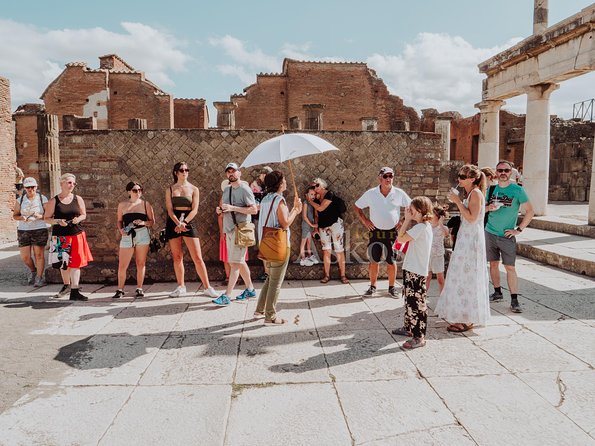
Pompeii is so large that it can be hard to know where to look first. This tour gives you a clear starting point: an archaeologist leads you through streets and buildings preserved by the eruption of Vesuvius in 79 AD, explaining how a Roman city worked as you go.
I like two things in particular: you see major sights such as the Forum and Great Theater with an expert to give them context, and the tour leaves you free to keep exploring afterward. That combination makes a guided visit feel less like a march through ruins and more like a useful introduction to a city you can continue discovering at your own pace.
The main consideration is time. Two hours can cover a lot, but not all of Pompeii, and the site is vast. Choose the three-hour option if you want to include the Villa of the Mysteries, and plan for uneven ground, steps and slopes whichever tour you book.
At a glance
- The city makes more sense with a guide: An archaeologist connects ordinary details, such as road tracks and shop entrances, to daily life in Pompeii.
- Pick two or three hours: The longer tour includes the Villa of the Mysteries and its celebrated frescoes.
- Expect a landmark route: Stops can include Porta Marina, the temples, Forum, Basilica, baths, houses, Lupanar and Great Theater.
- Your ticket is included: The tour includes a Pompei Express entry ticket, and you can stay inside the archaeological site after the guided portion.
- Private and shared options are available: Language availability can differ by tour type, so check the specific option before booking.
- The footing is uneven: Steps, ramps and a short steep climb make this a poor fit for wheelchair users and people with mobility impairments.
Why an archaeologist helps in Pompeii
Pompeii is not a tidy row of monuments with labels explaining what each one means. It is an enormous ancient city, with houses, shops, public buildings and streets spread across a wide area. Without context, it is easy to pass a significant detail without noticing it, or to see a handsome ruin without understanding what happened there.
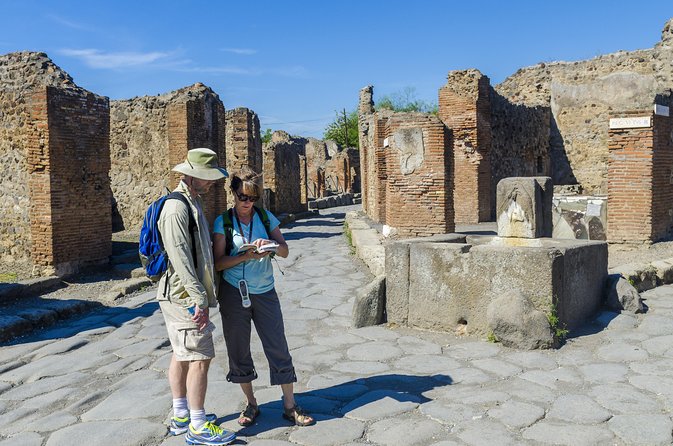
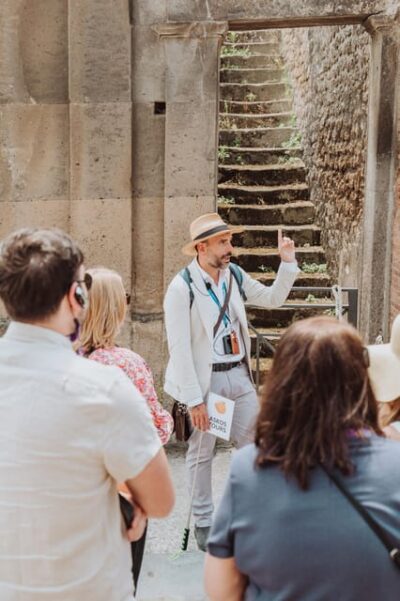
An archaeologist can help you read the place. Guides point out clues such as the design of a doorway, which may help distinguish a commercial space from a home, or handprints and cart tracks that make the old streets feel used rather than staged. These small observations are a big part of the tour’s value. You are not only looking at the remains; you are learning how to interpret them.
The guides named by visitors include Roxanne, Alessandra, Paolo, Anna, Teresa, Mario, Nicoletta and others. Your guide will depend on the date and tour language, so treat those names as examples, not a promise. What matters most is the archaeological perspective and the guide’s ability to make the details clear. Some guides have also worked on excavations at Pompeii, a useful connection when the subject turns to how the site is studied.
More Sorrento tours in Pompeii:
- Pompeii: Entry Ticket and Guided Tour with an Archaeologist
★ 4.8 · 19,459 reviews - Pompeii: Entry Ticket with Optional Audio Guide
★ 4.2 · 12,360 reviews - Pompeii Small Group Tour with an Archaeologist
★ 5.0 · 6,593 reviews
Entering through Porta Marina

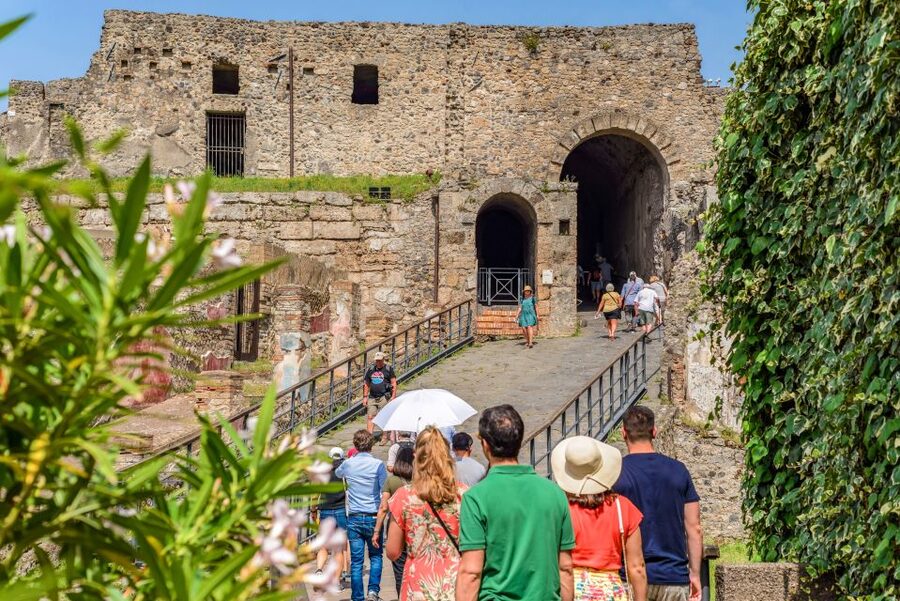
The walk begins at Porta Marina Superiore, one of Pompeii’s seven ancient gates. This is a fitting entrance: you are not simply arriving at a collection of ruins but crossing into a city that once had working streets, civic spaces and homes. The exact meeting point can vary with the option you book, so check your confirmation carefully before setting out.
From the gate, your guide leads you along the main streets and into the archaeological site. Pompeii’s scale is easy to underestimate. The paths cover a large area, and one visitor estimated that walking from one side of the site to the other takes about half an hour. A guided route helps you spend your limited time on important areas instead of trying to choose turns at every junction.
The pace is designed to cover ground while leaving room for explanation and questions. Many people find two hours manageable, though the route includes uneven surfaces, ramps, steps and a short steep climb. Wear shoes suited to rough historic paving, and bring water and sun protection as appropriate for the day. Food and drinks are not included.
Reading the Forum and public buildings
The Forum was the center of public life, and it is one of the most useful places to begin understanding Pompeii. Your guide explains how this open civic space related to the surrounding buildings and the city’s daily routines. Mount Vesuvius rises in view beyond the ruins, a striking reminder of the event that preserved the city and ended its life.
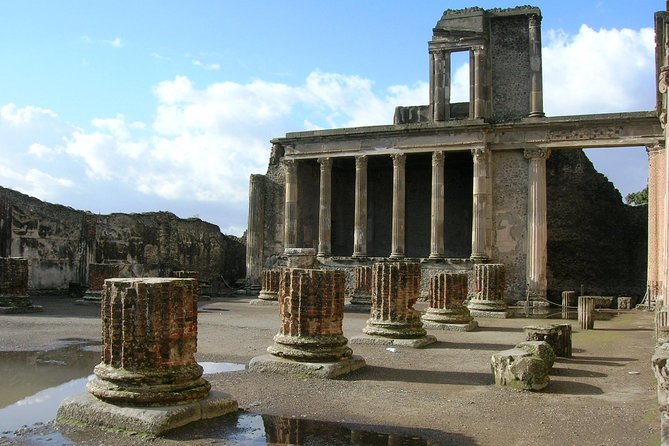
Nearby stops can include the Temple of Apollo, the Temple of Jupiter and the Basilica. The Basilica was a business and legal center, not a church in the modern sense. That distinction is a good example of why a guide matters: names can mislead, and a few minutes of context can change how you see a building.
The route may also take in the Forum Baths, where you can learn about the role of public bathing in Roman life. Temporary closures and crowding can lead guides to adjust the order or omit a stop. That flexibility is practical in a busy archaeological park, though it means the precise sequence is not guaranteed.
Houses, mosaics and the Lupanar
Pompeii’s homes make the city feel personal. Stops may include the House of Menander, the House of the Faun and the House of the Vettii. These residences offer a chance to look closely at domestic spaces and the art that decorated them. Your guide can help you notice details in frescoes and mosaics that you might otherwise see only as attractive patterns.
The Lupanar, Pompeii’s famous brothel, adds a more adult chapter to the visit. The tour explains the origin of its name and points out its preserved stone beds and frescoes. The subject is handled as part of the city’s history, but the content may not suit every child. One family found that a ten-year-old largely missed the adult context, but every child is different, so use your own judgment.
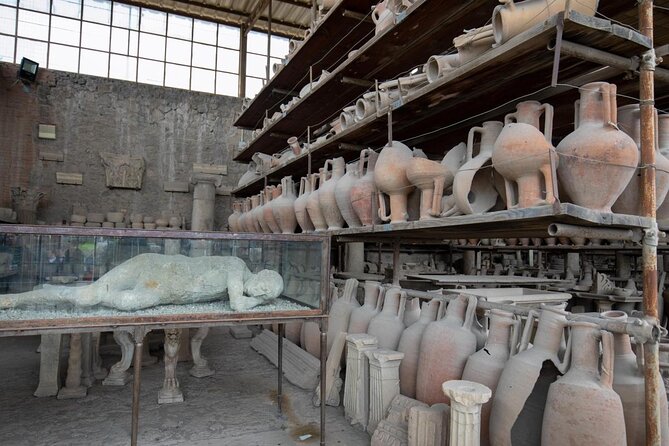
Plaster casts are another emotionally powerful part of Pompeii’s story. One point worth knowing before you arrive: the casts are not all placed in dwellings along the route. A visitor noted that three were displayed in sealed glass cases. Their location and display can change, so ask your guide what is accessible on the day rather than expecting to find casts throughout the houses.
Same coastline, a different kind of day:
- Pompeii: Skip-the-Line Entrance Ticket with Audio Guide
★ 4.0 · 2,509 reviews - Naples: Pompeii and Mt. Vesuvius with Lunch and Wine Tasting
★ 4.5 · 2,454 reviews - Pompeii: Archaeological Park Tour with Ticket on request
★ 4.5 · 2,283 reviews - Discover the Ancient Ruins of Pompeii: Day Trip from Rome
★ 3.5 · 2,247 reviews
The Great Theater and the Villa of the Mysteries

The Great Theater is a memorable stop, with a sense of scale that helps bring the public life of Pompeii into focus. Walking into the theater can be a highlight of the two-hour route. It is also a good place to imagine the city as a living community rather than a set of silent buildings.
The standard tour lasts two hours. If you book the three-hour version, the additional time includes the Villa of the Mysteries, outside the main cluster of sites. Its frescoes are the draw. A guide can explain the scenes and details in a way that makes the visit more rewarding than a quick look at paintings whose meaning may not be immediately clear.
That extra hour is worthwhile if the villa is high on your list or you want a longer guided introduction. The shorter tour is a sound choice if you prefer to explore more independently afterward. Several guides give visitors suggestions for what to see next, turning the tour into a practical orientation rather than a complete visit.
Choosing two hours, three hours or a private tour
The two-hour tour covers a broad selection of major stops and leaves you with time to wander on your own. It is a good fit if you want structure and historical context but do not want a guide to set the pace for your entire visit. Keep in mind that two hours cannot cover every corner of Pompeii. The site is too large, and some buildings may be closed or crowded.
The three-hour tour is the better choice if you want to include the Villa of the Mysteries and hear more detailed explanations. Guides can make that extra time feel worthwhile, particularly if you are keen on archaeology and frescoes. Still, you may want more than three hours in the park. Pompeii has enough to occupy a full day, and it is impossible to see everything in a single guided loop.
You can also choose between a shared small-group tour and a private tour. A private option gives your party its own guide, while the shared option costs less and brings you together with other participants. The exact group size is not specified, so do not assume a particular headcount. Languages also vary between shared and private departures. Check that your preferred language is offered for the type of tour you want.
What the price includes, and what it does not
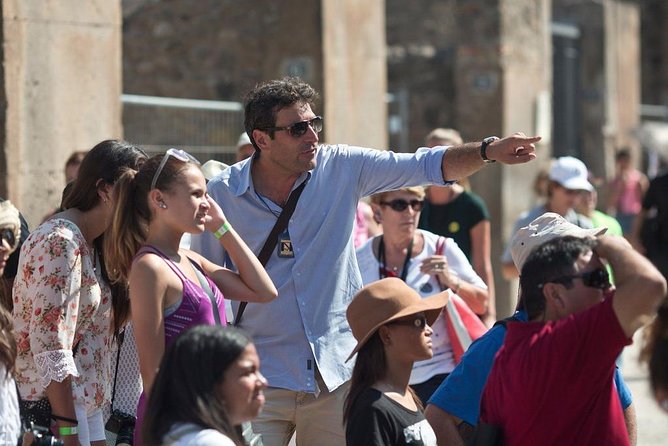
At about $40 per person, the tour includes a Pompei Express entry ticket and a two- or three-hour guided visit by an archaeologist. That is a strong value if you want a clear account of the city and help choosing what to notice. A guide is especially useful here because so much of Pompeii’s appeal lies in the meaning of ordinary structures and surviving details.
The ticket also saves you from having to arrange site admission separately. The tour is described as skipping the ticket line, but you should still arrive at the designated meeting point with time to check in. The meeting location varies by option, and the starting points listed are around the Pompeii entrance area. Follow the instructions for your chosen departure.
Headsets are available for groups of 16 or more. One visitor found the earpieces less easy to use than expected, so if your group is large, check that you can hear your guide clearly and speak up if you cannot. Transportation, food, drinks and personal expenses are not included.
After the guided walk, you are free to remain in the archaeological site and explore independently. That matters: the tour is a beginning, not a promise to show you everything. A later finish can leave less time for self-guided wandering, especially if the site is close to closing. An afternoon tour ending around 4 pm, for instance, may leave only about an hour before a 5 pm closing time, and some areas may close earlier. If you want a long independent visit, choose an earlier start when available.
Getting the most from your visit
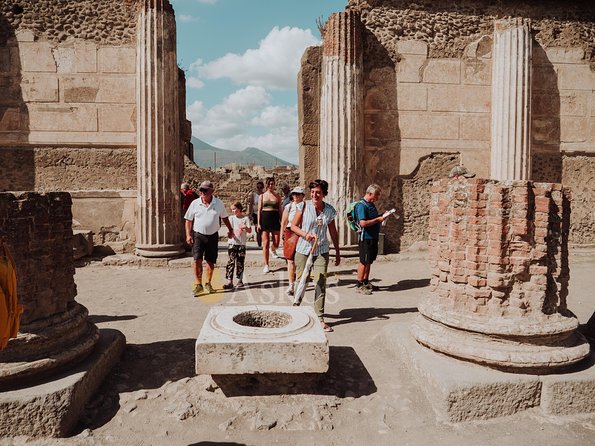
Arrive at the correct meeting point and make sure the staff has checked you in. There have been occasional mix-ups, including people who had to find their guide inside the site after the tour had started. Clear instructions are provided, but a quick confirmation on arrival is sensible. If a train delay threatens your start, contact the organizer as soon as you can; one late group was moved to a later departure, but that should not be treated as guaranteed.
Bring a passport or ID card. A copy is accepted. Large bags and luggage are not allowed, and a free cloakroom near the Porta Marina Superiore entrance is available subject to space. Smoking and mobility scooters are not permitted inside the site.
This tour is not recommended for wheelchair users or people with mobility impairments. The uneven terrain, steps, ramps and slope can be challenging, and there are additional steps near rest and dining areas. Dogs over 10 kilograms are not allowed. Children must be accompanied by an adult.
Is this the right Pompeii tour for you?
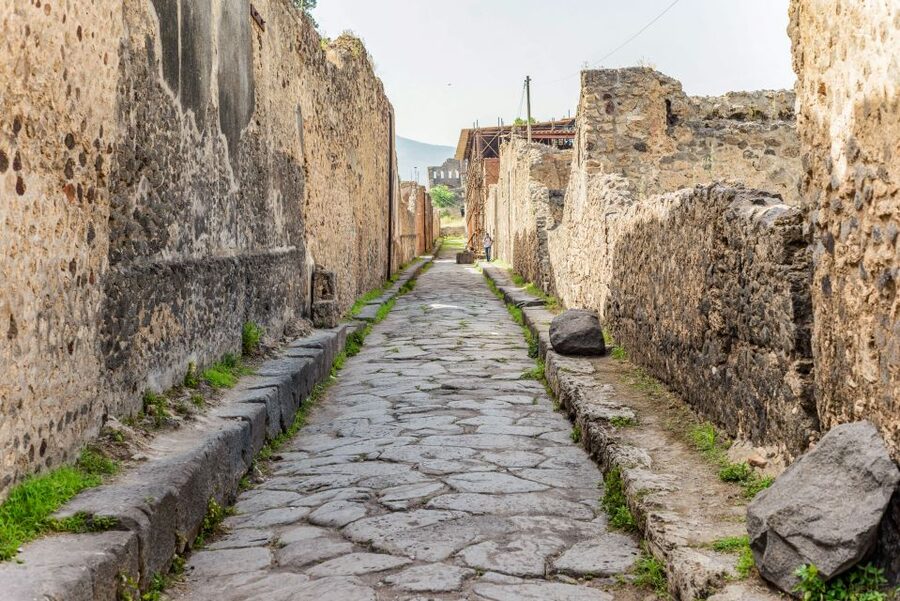
Book this tour if you want an archaeologist to give you the city’s essential context, point out details you might miss and help you choose what to explore afterward. It is particularly useful for a first visit, for families with curious older children, and for anyone who values explanation over simply walking from ruin to ruin.
Choose the three-hour option if the Villa of the Mysteries is a priority. Choose two hours if you want a brisk introduction and more freedom afterward. If you have significant mobility needs, need a fully accessible route, or want to see every part of Pompeii at your own pace, this may not be the right fit. For most visitors who can manage the terrain, though, it is a practical way to make a huge site feel legible.
FAQ
How long is the tour?
You can choose a two-hour or three-hour tour. The three-hour option includes a visit to the Villa of the Mysteries.
Is the entry ticket included?
Yes. A Pompei Express entry ticket is included with the tour.
Can I explore Pompeii after the guided tour?
Yes. You can stay inside the archaeological site and continue exploring on your own after the guided portion.
Is a private tour available?
Yes. You can choose a private group or a shared small-group experience.
Which languages are available?
Tours are offered in French, Spanish, German, Portuguese, English and Italian. Language options may differ between shared and private tours, so check the specific departure before booking.
Where is the meeting point?
The meeting point varies depending on the option you book. Check your booking details for the exact location.
Are headsets provided?
Headsets are available for groups of 16 or more.
Is the tour suitable for wheelchair users?
No. The tour is not recommended for wheelchair users or people with mobility impairments because the route has uneven ground, steps, ramps and a short steep climb.
Can I bring luggage or a large bag?
No. Luggage and large bags are not allowed inside the site. A free cloakroom near Porta Marina Superiore is available, subject to availability.
New this season around Pompeii
- Scooter rental on the Amalfi Coast★ 5.0 · 90 reviews
- Pompeii: Archeological Tour & Wine Tasting at Mt. Vesuvius★ 4.6 · 142 reviews
- Pompeii: Skip-the-Line Guided Tour★ 4.6 · 139 reviews
- Ancient Pompei in the afternoon★ 5.0 · 140 reviews
- Pompeii: 2-Hour Guided Tour with an Archaeologist★ 4.9 · 151 reviews
- Pompei: Pompeii Private Tour★ 4.8 · 146 reviews
- Horseback Riding on Vesuvius★ 5.0 · 144 reviews
- Pompeii Skip-the-Line Entry Small Group Guided Tour★ 5.0 · 151 reviews
Pompeii Tours, compared.
Pompeii: Entry Ticket and Guided Tour with an Archaeologist
Read our review →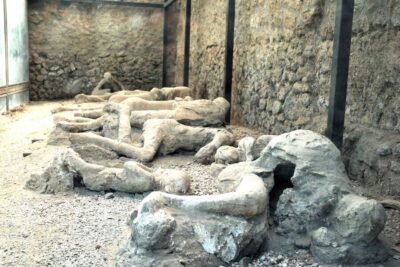
Pompeii: Entry Ticket with Optional Audio Guide
Read our review →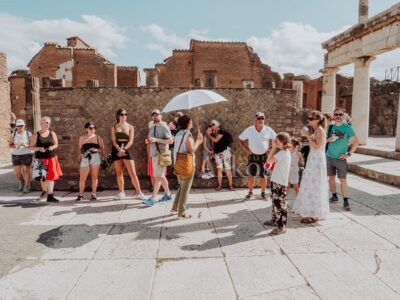
Pompeii Small Group Tour with an Archaeologist
Read our review →
Pompeii: Skip-the-Line Entrance Ticket with Audio Guide
Read our review →
Naples: Pompeii and Mt. Vesuvius with Lunch and Wine Tasting
Read our review →
Pompeii: Archaeological Park Tour with Ticket on request
Read our review →
Discover the Ancient Ruins of Pompeii: Day Trip from Rome
Read our review →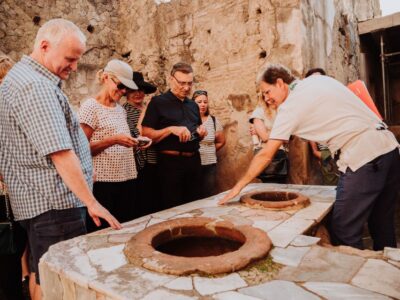
Browse the lists this tour appears in