
Reviewed · POMPEII TOURS
Guided Private Tour in Pompeii
Pompeii comes into focus when you stop treating it as a field of ruins and start reading it as a city: a bathhouse, a food counter, a grand home, then the forum where public life gathered. This private, archaeologist-led tour links those everyday places into a clear picture of Roman life.
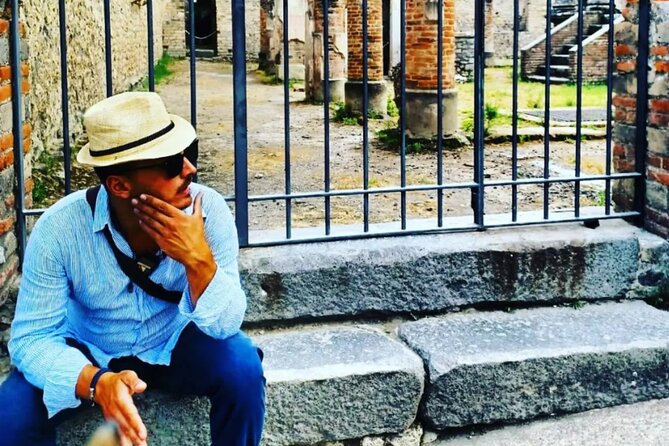
I like two things in particular: the private format, which lets your group set the pace and follow its interests, and the route’s variety, from the Stabian Baths and a small brothel to the grand Casa del Fauno and the central forum. Guides Tony or Toni are praised for lively storytelling, careful preparation and adapting the tour to the time available.
The main consideration is time. Two and a half hours is enough to see many major sights with a guide, but not to explore Pompeii at leisure. Tickets are also extra, and the food and wine experiences mentioned in the tour description are not listed among the included services, so confirm what is actually provided before booking.
The essential points before you book
- A private archaeologist guide: Only your group takes part, with an authorized guide for about two and a half hours.
- Thirteen named stops: The route ranges from temples and baths to a bakery-style food counter, a luxury house and Pompeii’s forum.
- Tickets cost extra: Park admission is €18 per person, with free entry for visitors under 18.
- A strong guide is central to the experience: Tony and Toni are praised for storytelling, historical context, humor and adjusting the route to the time available.
- Meet at Piazza Esedra: The start point is Ristorante Suisse, Piazza Esedra 10/13, and the tour ends back there.
- Food and wine need checking: Bread, Roman-style snacks and a glass of wine are mentioned in the experience description, but they are not listed as included.
Read Pompeii as a living city
Pompeii is often introduced through its destruction in the eruption of Vesuvius in AD 79. That story matters, but it can eclipse the more ordinary life that makes the site so compelling: where people shopped, washed, ate, prayed, argued and sought entertainment. This tour’s route is built around those varied parts of the city rather than a single monument.
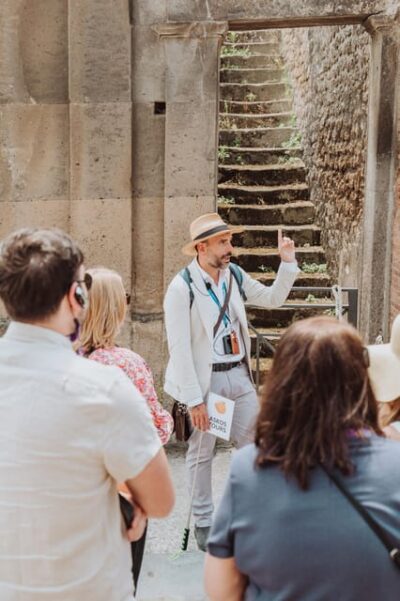
The private archaeologist guide is the key. Pompeii’s ruins can look like a maze of stone walls if you do not know what you are seeing. A guide can connect a counter or courtyard to its former purpose and help you understand how public and domestic life fitted together. The praise for Tony and Toni focuses especially on this kind of storytelling, alongside their command of archaeology and ability to make the past feel human.
The format also allows a degree of flexibility. You will not be sharing the guide with a large mixed group, and the tour’s description says it can be tailored. Past tours with Tony have been adjusted to suit a tight schedule or particular interests. Still, a set route with many stops in roughly two and a half hours means flexibility has limits. If one place catches your attention, ask early whether the guide can spend longer there.
More private tours in Pompeii:
- Pompeii Ruins Private Tour with Optional Skip-the-Line Entry
★ 4.9 · 732 reviews - Pompeii private tour with an Official Guide
★ 5.0 · 631 reviews - Pompeii Private Tour with an Archaeologist and Skip The Line – 3 hours
★ 5.0 · 564 reviews
From the entrance to Pompeii’s performance district
The meeting point is Ristorante Suisse at Piazza Esedra, close to the entrance named for the tour. The specified entrance is Piazza Esedra, Porta Marina Inferiore, described as a useful way to avoid queues and take in the view of Pompeii’s ancient port. That is a practical start: it puts you near the archaeological area and gives the guide a chance to orient you before the walk begins.
The first stop is Pompeii Archaeological Park. It is allocated five minutes, so think of this as an introduction rather than a full look at the site. The guide can set the scene, point out the approach and establish how the city’s remains relate to the port and surrounding area.
Next comes the Teatro Grande and the nearby Teatro Piccolo, the large and small theaters. The stop is also listed at five minutes, and the theaters are viewed panoramically rather than entered. The information supplied says they are not accessible at the moment, so this is a look from a viewpoint, not a close exploration of the performance spaces. Even at a distance, the theaters help show that Pompeii was a place of public entertainment as well as trade and politics.
At the Temple of Isis, the tour visits a house opposite the temple. The description connects this house with the discovery of Pompeii, but gives no further detail, so ask your guide to explain that link on site. The value here is the pairing of a religious landmark with a domestic setting: it gives you a sense of how sacred spaces fitted into the city’s everyday street pattern.
Food counters, baths and the city’s less formal side
The Thermopolium of Vetutius Placidus is a food counter with striking frescoes. It offers a useful change of scale after the theaters and temple. Instead of imagining only grand villas and civic monuments, you can picture the practical business of serving food to people on the move. The stop is short, five minutes, but the counter’s decoration gives the guide a clear starting point for talking about eating out in Pompeii.
The Stabian Baths receive twenty minutes, one of the longer visits on the route. This public bathing complex is presented as a place of healing and a way people maintained their health. For you, the extra time matters: baths were not simply rooms for washing, but major civic facilities, and a guide can help distinguish the roles of the different spaces. The tour description also mentions a Roman-style bathing ritual as part of the broader experience. Because no specific ritual is identified among the included services, check before booking if that element is important to you.
The Piccolo Lupanare, a small brothel, is another twenty-minute stop. It brings a more candid side of Roman urban life into the tour. The subject may not suit every age or group, but it can help explain the range of businesses and social activity found in the city. The stated stop is a visit to the brothel itself, not just an exterior view.
Food and drink are part of the tour’s stated concept: freshly baked bread, Roman-style snacks and a glass of wine in a villa garden are described. Yet the listed inclusions are the guide service, private tour and Pompeii highlights, while food and drink are not named. Do not assume tastings are covered by the group price. Confirm whether they are available, included or arranged separately.
A luxury home and Pompeii’s civic heart
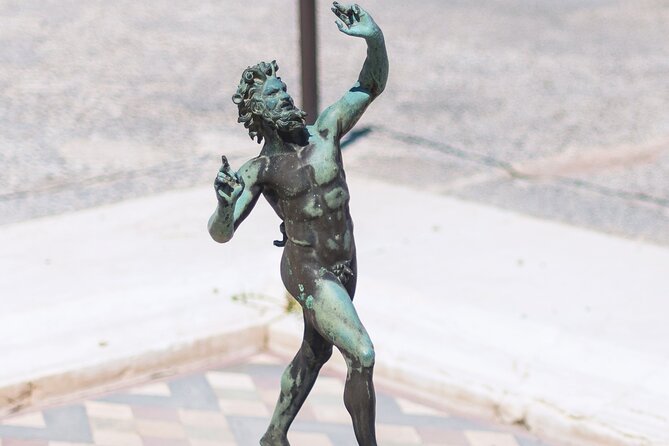
Casa del Fauno is one of Pompeii’s grandest homes and receives twenty minutes. Its scale and design make it a useful counterpoint to the food counter and bathhouse. The tour describes it as an example of luxury domestic life; you can expect the guide to explain how a wealthy household differed from the city’s public spaces and more modest businesses.
The experience description also refers to relaxing in a Roman villa garden, looking at frescoes and having wine. Casa del Fauno is the listed luxury house, but the information does not confirm that this is where the garden visit or wine takes place. Treat those details as something to verify rather than a guaranteed part of the route.
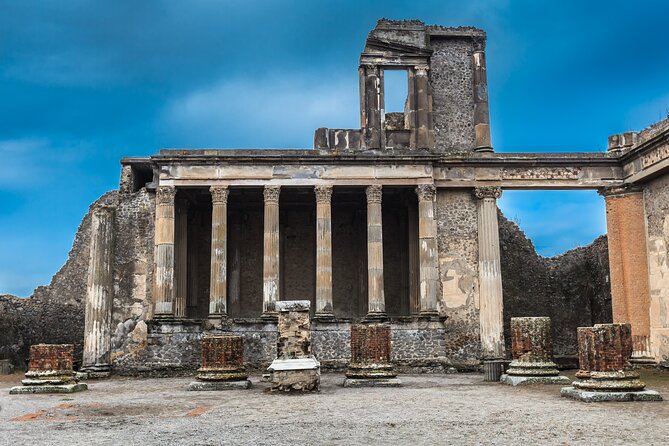
The Basilica follows, with five minutes to see the building described as Pompeii’s Roman parliament and its marble decoration. It is a brief stop, but it helps set up the next cluster of public monuments. The Temple of Apollo, also allotted five minutes, introduces one of the city’s sanctuaries. Together, these sites show how government, worship and public gathering occupied the same central area.
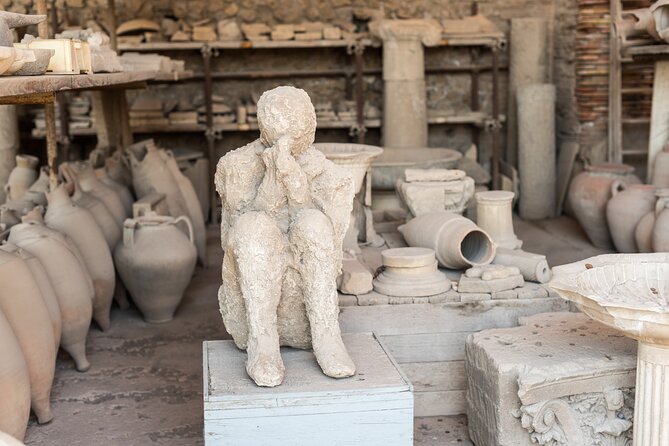
The Macellum, Pompeii’s food market, gets fifteen minutes. Its frescoes and body casts are singled out, making it one of the more varied stops. The market links the city’s economy to the daily task of buying food, while the casts bring the eruption’s human cost into view. The contrast can be stark: a place built for trade now offers evidence of lives abruptly interrupted.
The Temple of Venus is a five-minute stop, noted for its scenery, while the Temple of Jupiter Capitolino is another five-minute visit. At the latter, the description points to public speech in the Roman forum. These short visits are best understood as part of a connected civic centre, not as separate, in-depth temple tours.
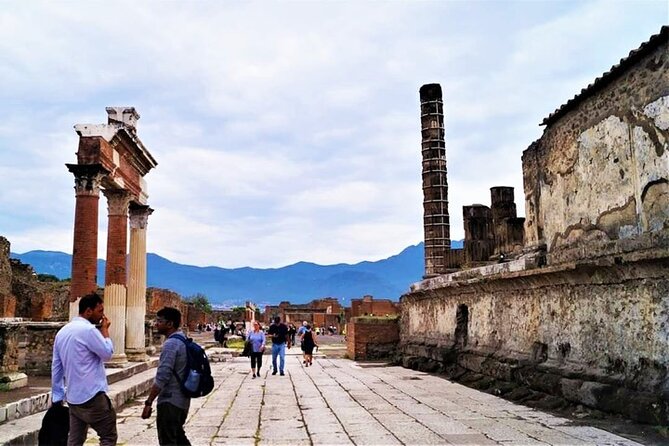
The route ends at the Forum, the main square and the heart of public activity. Fifteen minutes gives your guide time to explain how the space brought the city together. By arriving here after the baths, homes, market and religious sites, you can make more sense of the forum as a working centre rather than a grand open space alone.
More guided departures in Pompeii:
- Pompeii: Entry Ticket and Guided Tour with an Archaeologist
★ 4.8 · 19,459 reviews - Pompeii: Entry Ticket with Optional Audio Guide
★ 4.2 · 12,360 reviews - Pompeii: Skip-the-Line Entrance Ticket with Audio Guide
★ 4.0 · 2,509 reviews - Pompeii: Skip-the-line-Ticket and Guided Tour
★ 4.6 · 1,152 reviews
What the pace means for your visit
The listed stops add up to about two hours and ten minutes, while the advertised tour lasts approximately two and a half hours. The difference leaves some room for walking between sites and explanations, though the precise pace may change. Pompeii is extensive, and the route covers a lot of ground in a short visit, so comfortable walking shoes and water are sensible choices. The provided information does not specify a walking distance or rest stops.
Some stops are only five minutes long. That is enough for an explanation and a look, not a slow, independent visit. Longer stops at the baths, brothel, Casa del Fauno and market give the guide more space to tell a story and answer questions. If you want a deep look at every building, plan for additional time in Pompeii after the tour, if your schedule allows.
The guide’s ability to adjust the tour is a real advantage, but be direct about your priorities at the start. Tell Tony or Toni if you are most interested in domestic life, archaeology, religion or the eruption. The guide has been praised for adapting visits to available time and for mixing historical context with humor, which can make a dense site easier to follow.
How to judge the price
The private tour costs $326.72 per group of up to five, before park admission and tips. At a full group of five, the guide fee works out to about $65.34 per person. Add the €18 entrance fee per person, with free admission for those under 18. Since one charge is in dollars and the other in euros, keep them as separate costs rather than relying on a fixed combined total.
For a couple, the same group price comes to about $163.36 per person before admission. That is a considerable premium over joining a group tour, but you are paying for a private guide, a focused route and the chance to ask questions without competing for attention. The value improves as your group gets closer to five, especially if you care about explanation more than simply ticking off the main sites.
The guide’s role is the main reason to consider the expense. Praise for Tony and Toni consistently centres on clear historical context, strong preparation, lively storytelling and a pace tailored to the group. If you are comfortable exploring ruins on your own, the private fee may be hard to justify. If you want help turning scattered remains into a coherent picture of city life, it can be money well spent.
Practical details and who should book
The tour starts and ends at Ristorante Suisse, Piazza Esedra 10/13, in Pompei. It is listed as operating daily from 9 a.m. to 3 p.m. during the stated period of May 28, 2025 to June 16, 2026. Confirmation is provided at booking, the activity is near public transportation, and most people can participate.
This works best for a small group that wants a guided overview and values personal attention. It is also a good fit if you have limited time: Tony has arranged tours around tight schedules, including visits that covered Pompeii highlights within a few hours. Families should note that the route includes a brothel, and admission is free for visitors under 18, though the tour itself is not stated to be age-specific.
The experience is less suitable if you want to wander at your own pace, linger over every house or spend a full day on site. Its breadth is a strength, but the short allotted visits mean you will see a range of highlights rather than study each one in detail. Also confirm food, snacks, wine and any bathing activity before booking, since these are described but not included in the stated service list.
Should you book this Pompeii tour?
Book it if you want an archaeologist to bring Pompeii’s streets, homes, baths and public spaces together in a private, well-paced introduction. Tony and Toni’s storytelling and flexibility are the tour’s strongest selling points, and the range of stops is impressive for two and a half hours.
Skip it if you prefer a low-cost self-guided visit or want long, unhurried time at each site. Before you pay, confirm the food and wine details, remember that park entry is extra, and tell the guide what matters most to you. That simple preparation can help make the short visit feel focused rather than rushed.
FAQ
How long is the tour?
It lasts approximately two hours and thirty minutes.
How much does the private tour cost?
The price is $326.72 per group, for up to five people.
Is Pompeii Archaeological Park admission included?
No. Admission costs €18 per person. Entry is free for visitors under 18.
Is the tour private?
Yes. Only your group takes part.
Who leads the tour?
The service includes an authorized archaeologist guide. Guides named in the available information are Tony and Toni.
Where does the tour start and end?
It starts at Ristorante Suisse, Piazza Esedra 10/13, 80045 Pompei, and ends back at the meeting point.
What are the tour’s opening hours?
The stated hours are 9 a.m. to 3 p.m. daily, from May 28, 2025 to June 16, 2026.
Does the tour include food or wine?
Food and wine are described as part of the experience, but they are not included in the stated list of services. Confirm the details before booking.
Can the Teatro Grande and Teatro Piccolo be visited?
They are viewed panoramically, and the supplied information says they are not accessible at the moment.
New this season around Pompeii
- The Ultimate Ruins of Pompeii and Herculaneum Private Day Trip★ 5.0 · 103 reviews
- 3-Hours Private Walking Tour in Pompeii with an Archaeologist★ 5.0 · 19 reviews
- Official Ape Dolce Vita Tour – Amalfi Coast★ 5.0 · 52 reviews
- Private Tour Walking in Ferriere Valley Nature Reserve Amalfi★ 5.0 · 8 reviews
- Jewels of the Amalfi Coast: Private Excursion★ 5.0 · 7 reviews
- Full Day Private Tour – Positano Amalfi Ravello or Sorrento★ 5.0 · 41 reviews
- Herculaneum and Amalfi Coast Private Tour for Families★ 5.0 · 4 reviews
- Private Day Tour of Amalfi Coast★ 5.0 · 6 reviews
Pompeii Tours, compared.
Pompeii: Entry Ticket and Guided Tour with an Archaeologist
Read our review →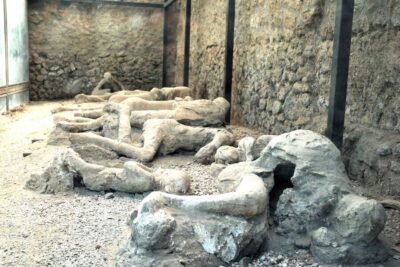
Pompeii: Entry Ticket with Optional Audio Guide
Read our review →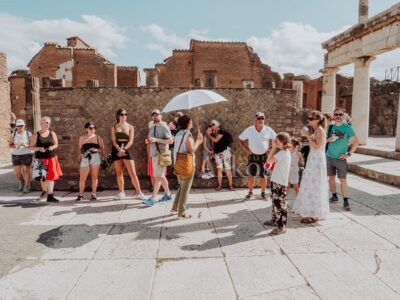
Pompeii: Small Group Tour with an Archaeologist
Read our review →
Pompeii: Skip-the-Line Entrance Ticket with Audio Guide
Read our review →
Naples: Pompeii and Mt. Vesuvius with Lunch and Wine Tasting
Read our review →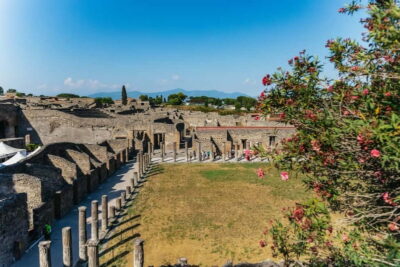
Pompeii: Archaeological Park Tour with Ticket on request
Read our review →
Discover the Ancient Ruins of Pompeii: Day Trip from Rome
Read our review →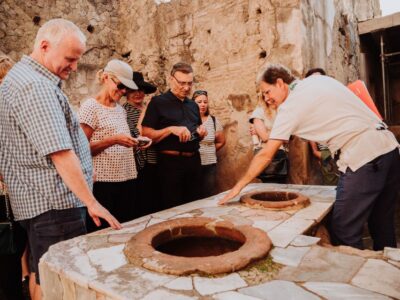
Browse the lists this tour appears in