
Reviewed · POMPEII TOURS
Pompeii: Small-Group Tour of Pompeii and Herculaneum
Pompeii shows a Roman city interrupted; Herculaneum shows just how much more can survive beneath volcanic mud. I like that an archaeologist guide connects the ruins to daily life, and that a group of up to 20 makes this a more personal way to take in two large sites in one day.
The main compromise is the 30-minute lunch break between sites. It is enough to grab a quick bite, but not much of a pause after two hours of walking, and the tour ends at Herculaneum rather than returning you to Pompeii.
Key points before you book
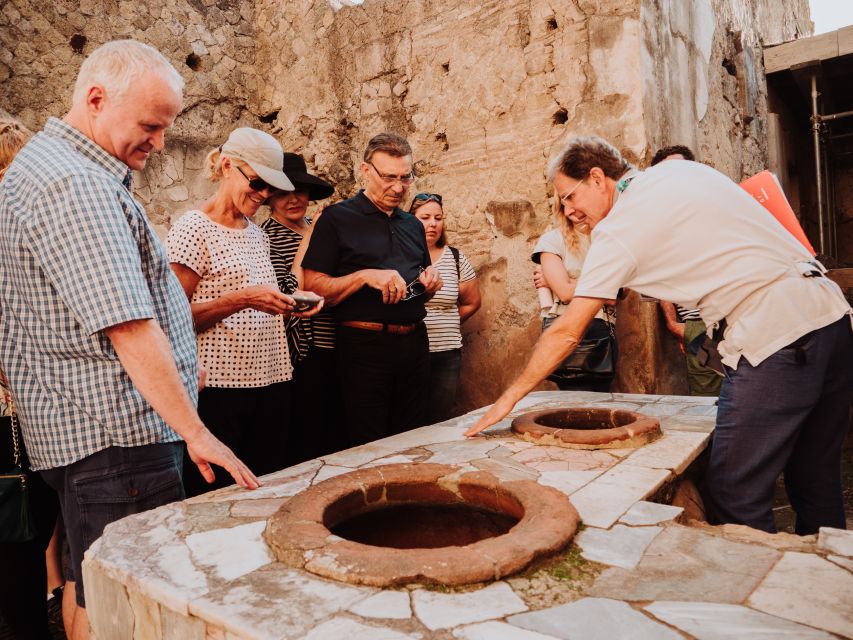
- Two cities, two kinds of preservation: Pompeii was buried in pumice and ash, while Herculaneum’s deep mud helped preserve upper floors, wooden objects, paintings, and mosaics.
- An archaeologist leads both walks: The guide supplies the context that can be hard to piece together while wandering through extensive ruins on your own.
- Small group, up to 20 people: Headsets are provided when the group has more than 10 participants.
- A short break divides the day: Plan on a 30-minute pause in Pompeii before the train journey to Herculaneum.
- The tour finishes at Herculaneum: Arrange your onward journey from Ercolano; the tour does not include a return to Pompeii.
- Bring practical essentials: Comfortable clothes, water, sun protection in summer, and a raincoat or poncho for sudden showers will help.
Two Roman cities, and two very different views
Pompeii and Herculaneum were both buried by the eruption of Mount Vesuvius in 79 A.D., but what survived at each site gives you a different impression of Roman life. At Pompeii, the scale is the story: streets, buildings, and traces of a whole city let you imagine how public and everyday life fit together.
Herculaneum is smaller, but its preservation can feel startlingly close to home. The volcanic mud that covered it reached about 20 meters deep, protecting details such as second floors, carbonized wooden objects, paintings, and mosaics. That contrast is the reason I like visiting both rather than treating one as a substitute for the other.
The day is built around that comparison. You begin with a guided walk at Pompeii, have a short break, then travel by Circumvesuviana train to Ercolano for another guided walk. With an archaeologist explaining what you are seeing, details that might otherwise look like weathered walls or fragments become clues to how people lived, worked, and decorated their homes.
More Sorrento tours in Pompeii:
- Pompeii: Entry Ticket and Guided Tour with an Archaeologist
★ 4.8 · 19,459 reviews - Pompeii: Entry Ticket with Optional Audio Guide
★ 4.2 · 12,360 reviews - Pompeii: Small Group Tour with an Archaeologist
★ 4.8 · 12,264 reviews
Starting at Porta Marina Inferiore
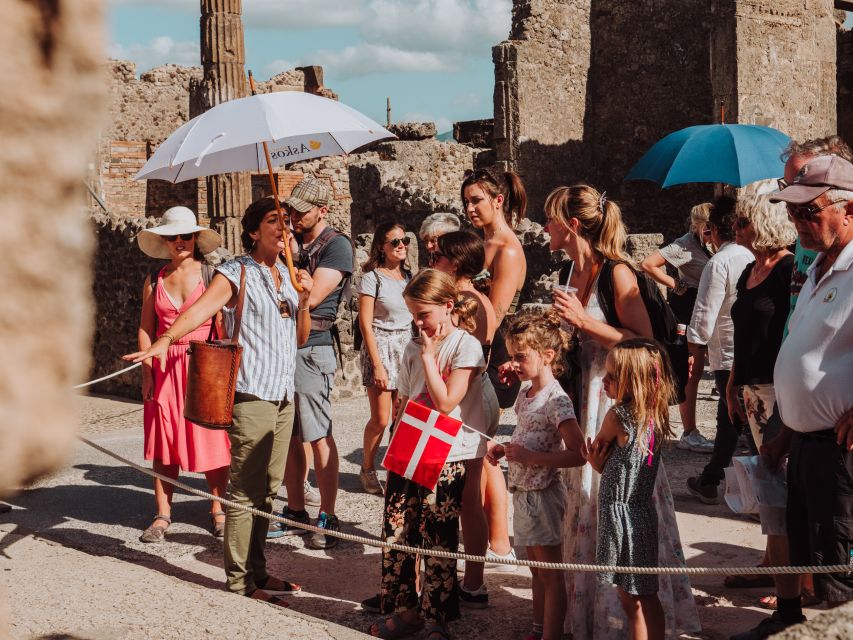
The meeting point is on the left side of Pompeii’s Porta Marina Inferiore entrance, near the Arte bus stop. It is a few minutes from the Pompei-Villa dei Misteri Circumvesuviana station, and the guide is meant to carry an Askos Tours sign.
Give yourself enough time to find the exact spot. Pompeii has several entrances and tour groups, and a meeting point near a busy archaeological site can be less obvious than it sounds. One practical detail worth remembering is the sign’s name, Askos Tours, rather than simply looking for a generic guide holding a flag.
You will need your passport or ID card. The tour is offered in English or Italian, and its stated duration is 5.5 hours. Check the available start time when booking, then plan your day around the fact that the experience ends at Herculaneum.
Two hours among Pompeii’s streets
The first guided walk lasts about two hours. Pompeii is the larger site, and a guide helps you use that time well by choosing areas and details that show how the ancient city worked. Without that framing, it is easy to spend time looking at ruins without knowing which features matter or how they relate to one another.
The eruption is central to the story, but the visit is not only about disaster. Volcanic material preserved parts of the city, and the guide can help you connect buildings and objects with the people who used them. The plaster casts at Pompeii can also make the human cost of the eruption immediate. They are a powerful, sobering part of the visit, so be prepared for a more emotional encounter than a typical walk through ancient streets.
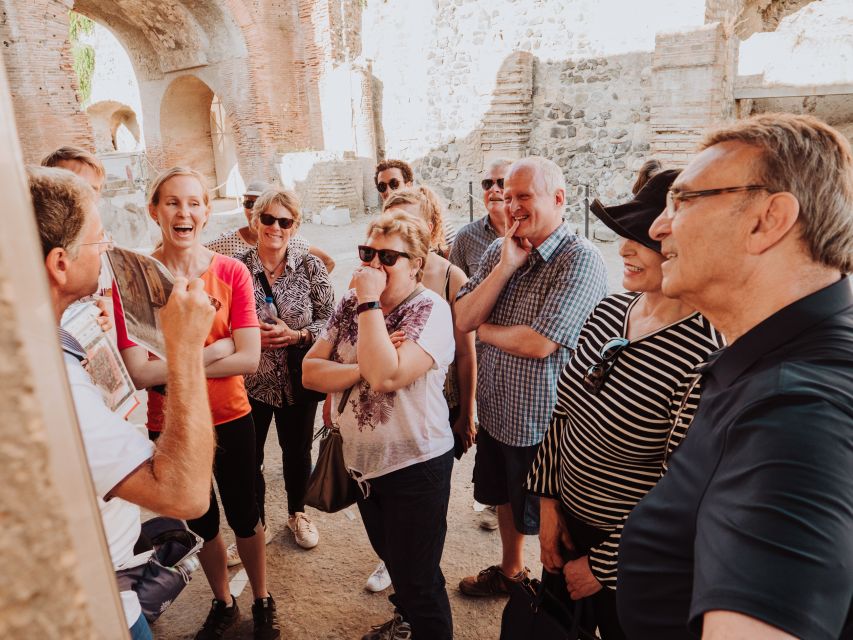
A small group can make a difference here. The maximum is 20, and headsets are supplied when there are more than 10 people. That helps you follow the explanation without having to crowd around the guide at every stop, especially in a busy site.
The experience depends in part on the guide’s ability to bring the place to life. Guides who have led this tour include Diego, Paulo, Vincenzo, Alfredo, Julia, Sergio, and others. Their approaches may vary, but the recurring strength of the experience is the combination of archaeological context, clear explanations, and stories that make the ruins easier to picture as a lived-in city.
The short Pompeii pause
After the Pompeii walk, you have about 30 minutes for a break. You can look for lunch or browse the souvenir shops outside the ruins, but this is a quick stop, not a leisurely meal. If sitting down and getting out of the sun matters to you, plan ahead and keep expectations realistic.
This is the tour’s clearest trade-off. You may be hungry after two hours on your feet, and a short window can feel rushed if you want a proper meal. A simple, quick lunch is the safer plan than counting on enough time for a relaxed restaurant stop.
Think about water and shade, too, particularly in summer. The sites can mean long stretches outdoors, and the day continues with another guided walk after the train ride. Sunglasses, a hat, and water are specifically worth bringing in hot weather.
Same coastline, a different kind of day:
- Pompeii Small Group Tour with an Archaeologist
★ 5.0 · 6,593 reviews - Pompeii: Skip-the-Line Entrance Ticket with Audio Guide
★ 4.0 · 2,509 reviews - Naples: Pompeii and Mt. Vesuvius with Lunch and Wine Tasting
★ 4.5 · 2,454 reviews - Pompeii: Archaeological Park Tour with Ticket on request
★ 4.5 · 2,283 reviews
The train ride to Ercolano
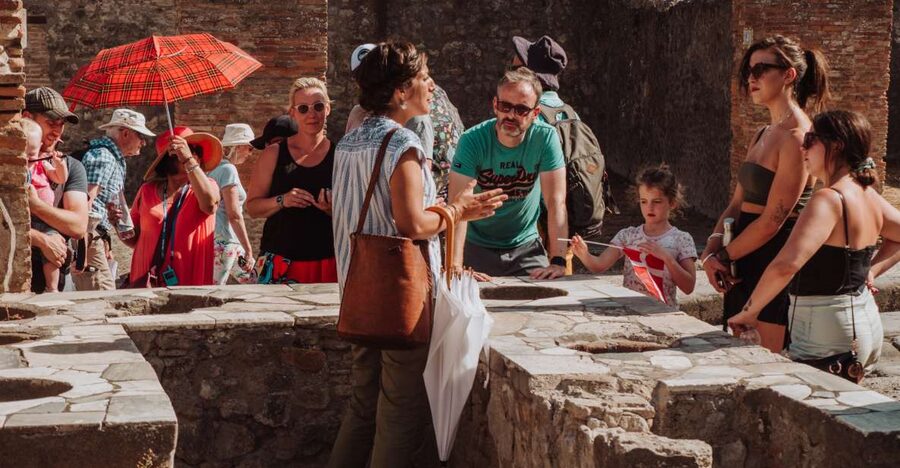
From Pompeii, the group takes the Circumvesuviana train to Ercolano. The train journey is described as roughly 20 minutes, while the itinerary allows 30 minutes for the transfer. That time is part of the day’s movement between sites, not a separate sightseeing stop.
The train makes it possible to see both archaeological areas without arranging a private transfer yourself, but it also means the tour depends on local rail service. Delays can lengthen the day. In some circumstances, a private minibus has been used instead, but you should not assume that will be the transport on your date.
Once you reach Ercolano, the tour continues on foot at the Archaeological Site of Herculaneum. The route is easy to understand as a change of scene: Pompeii gives you a broader sense of a city, while Herculaneum offers a closer look at domestic spaces and preserved materials.
Herculaneum’s preserved rooms and details
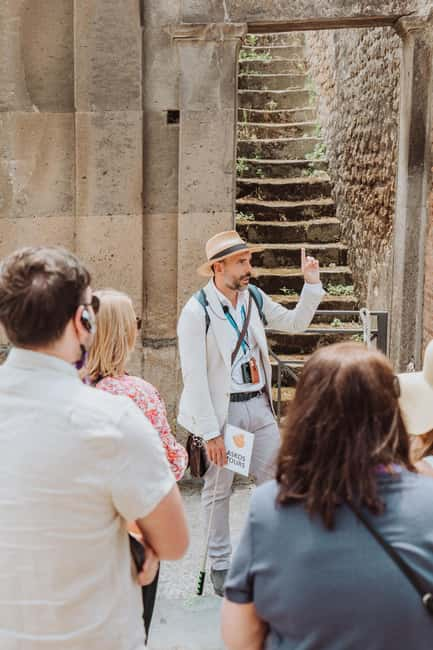
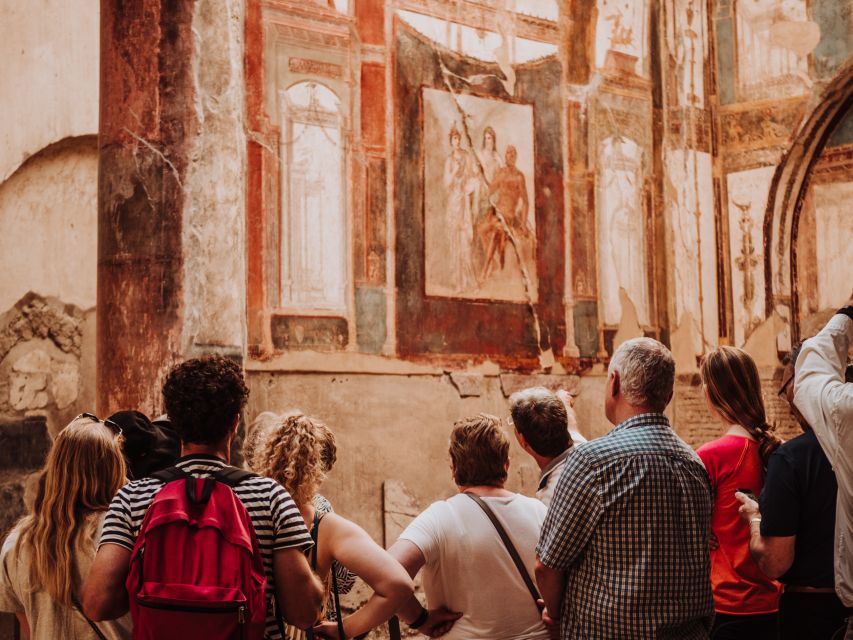
Herculaneum is smaller than Pompeii, but it can be the site that stays with you longest. Its burial under a thick avalanche of mud helped preserve features that are less commonly seen intact elsewhere, including upper floors, carbonized wood, wall paintings, and mosaics. Those details make it easier to imagine the appearance and comfort of Roman homes.
The tour gives you about two hours here, again with an archaeologist explaining what the buildings and surviving decoration can tell you. Herculaneum offers a vivid view of the opulent lifestyle enjoyed by wealthier Roman residents. The contrast with Pompeii is useful: the two sites share the same catastrophe, but the remains tell different stories about scale, status, and preservation.
I would not skip Herculaneum simply because you have already seen Pompeii. The sites complement each other rather than repeat one another. Pompeii can leave you thinking about the city and its sudden destruction; Herculaneum brings you closer to the interiors and materials of private life.
The tour ends at Parco Archeologico di Ercolano. That is useful if you plan to continue exploring the area, but important if you began the day in Pompeii or need to return to a particular station. You are responsible for your onward plans from the finish point.
What the group format and ticket details mean
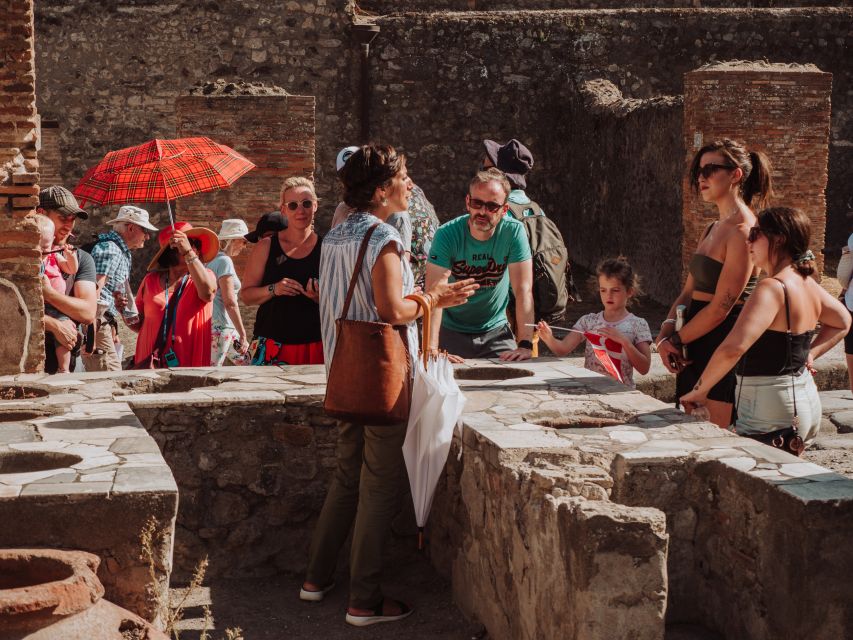
A maximum of 20 people is a practical middle ground. You get a guide’s explanation and a shared route without the scale of a very large coach group. When the group exceeds 10, headsets are provided so you can hear the guide more clearly.
Entry tickets are provided for both sites, and the activity is described as skipping the ticket line. The tour information also lists Herculaneum admission as €16 for adults and €2 for EU citizens aged 18 to 25. Since admission is stated as provided, check the booking details for exactly how the ticket is handled and whether any current age-based conditions apply. No tour price is supplied here, so compare the cost at booking with what is included rather than judging value by the ticket alone.
For me, the central value is the guide’s interpretation. These are extensive archaeological sites, and the tour’s two guided walks help you see more than stones and foundations. You also save the effort of planning the transfer between Pompeii and Herculaneum, while keeping the group small enough to ask questions.
Who will appreciate this day most
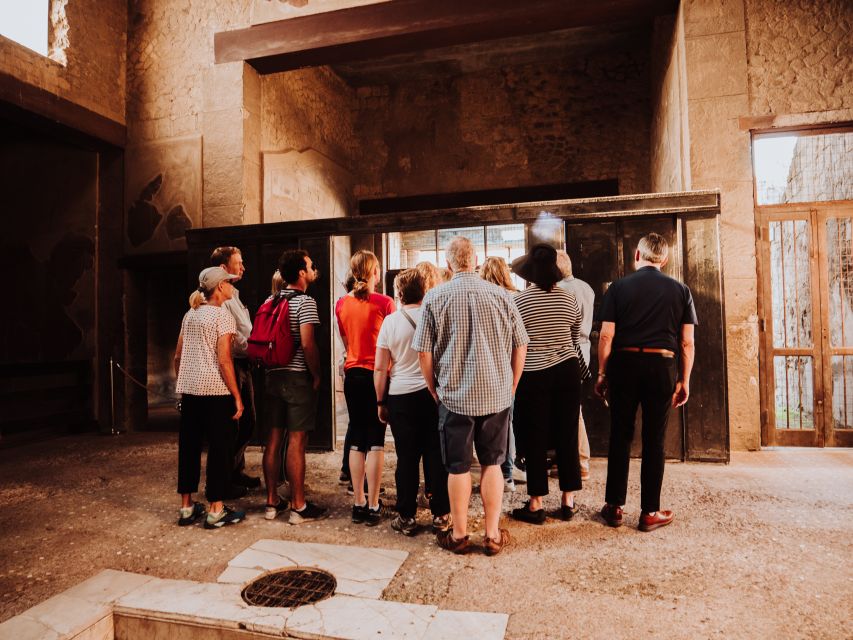
This suits you if you want to see both major sites in one outing and value historical explanation over independent wandering. It is especially useful if you have limited time in Campania, or if you suspect you would find Pompeii’s size overwhelming without someone choosing a route and explaining what you are looking at.
It is less suitable if you need step-free access or use a wheelchair. The activity is not suitable for people with mobility impairments or wheelchair users. Even for visitors without mobility concerns, expect a substantial amount of walking across two separate sites, so comfortable clothing and shoes are sensible.
Families with older children interested in Roman history may find the stories and contrasts engaging. The tour has also worked for mixed-age groups, including a 10-year-old, but it remains a long day with a lot of information. If you prefer a slow pace, long meal breaks, or time to explore every corner on your own, consider visiting one site at a time instead.
Practical details that make the day easier
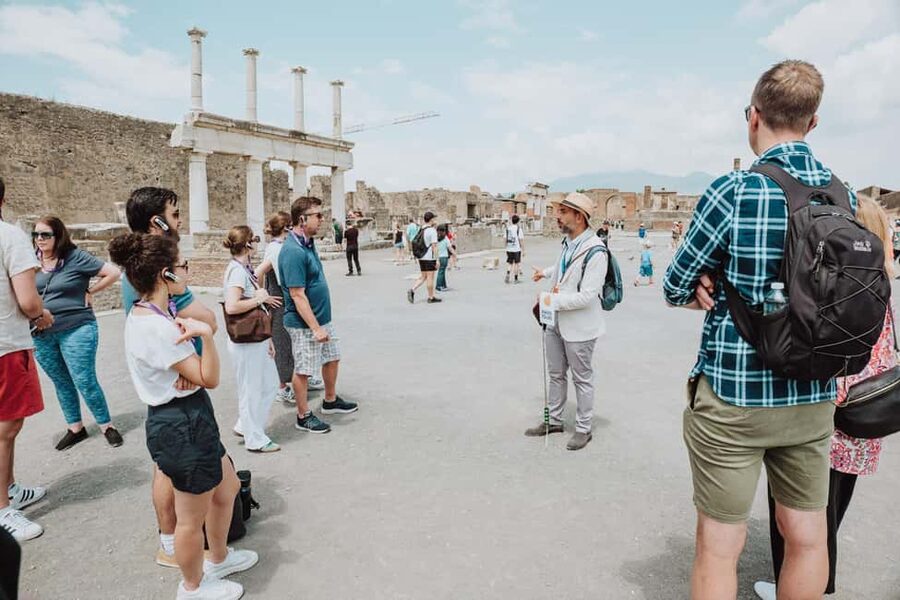
Wear comfortable clothes and bring your ID or passport. In summer, pack water, sunglasses, and a hat; for changeable weather, a raincoat or poncho is advised. These are simple items, but the day’s two walking tours make them more than minor conveniences.
Keep the lunch break in mind when deciding what to carry. A snack can be useful if you do not want to rely on finding a proper meal during the short pause. The group moves on to the train and then Herculaneum, so avoid planning a long sit-down lunch in the middle of the schedule.
You can cancel up to 24 hours in advance for a full refund, and the reserve-now, pay-later option lets you hold a place without paying immediately. Starting times depend on availability. Those terms help if your plans are still taking shape, but confirm the exact meeting time and ticket arrangements when you book.
Should you book this Pompeii and Herculaneum tour?
Book it if you want an archaeologist-led introduction to both sites in one day, and you are comfortable with a short lunch break and a finish in Ercolano. The pairing is the real strength: Pompeii’s scale and Herculaneum’s remarkably preserved interiors give you two distinct ways to understand life around Vesuvius.
Choose a single-site visit instead if you want a slower pace, a longer meal, or more time to wander without a group schedule. For most visitors with a half-day to spare, though, this is a thoughtful, efficient way to see both places, provided you plan your onward transport from Herculaneum.
FAQ
How long is the tour?
The stated duration is 5.5 hours. It includes guided walks at Pompeii and Herculaneum, a break, and the train transfer between the sites.
Where is the meeting point?
Meet on the left side of Pompeii’s Porta Marina Inferiore entrance, near the Arte bus stop. Look for a guide holding an Askos Tours sign.
Which languages are offered?
The live tour is offered in English and Italian.
How large is the group?
The group has a maximum of 20 people. Headsets are provided when there are more than 10 participants.
Are entry tickets included?
The tour information says entry tickets are provided for both Pompeii and Herculaneum and describes the activity as skipping the ticket line. It also lists Herculaneum admission prices, so check your booking details for the current ticket terms.
How long is the lunch break?
The break in Pompeii is about 30 minutes. That is enough for a quick bite, but may not allow time for a relaxed meal.
How do you get from Pompeii to Herculaneum?
The group takes the Circumvesuviana train to Ercolano. The ride is described as about 20 minutes, with 30 minutes allocated for the transfer in the itinerary.
Where does the tour end?
The tour ends at Parco Archeologico di Ercolano. It does not include a return to Pompeii.
What should I bring?
Bring a passport or ID card and wear comfortable clothes. In summer, take water, sunglasses, and a hat; a raincoat or poncho is useful in case of sudden rain.
Can I cancel the booking?
You can cancel up to 24 hours in advance for a full refund. The reserve-now, pay-later option lets you book without paying immediately.
New this season around Pompeii
- Scooter rental on the Amalfi Coast★ 5.0 · 90 reviews
- Pompeii: Archeological Tour & Wine Tasting at Mt. Vesuvius★ 4.6 · 142 reviews
- Pompeii: Skip-the-Line Guided Tour★ 4.6 · 139 reviews
- Ancient Pompei in the afternoon★ 5.0 · 140 reviews
- Pompeii: 2-Hour Guided Tour with an Archaeologist★ 4.9 · 151 reviews
- Pompei: Pompeii Private Tour★ 4.8 · 146 reviews
- Horseback Riding on Vesuvius★ 5.0 · 144 reviews
- Pompeii Skip-the-Line Entry Small Group Guided Tour★ 5.0 · 151 reviews
Pompeii Tours, compared.
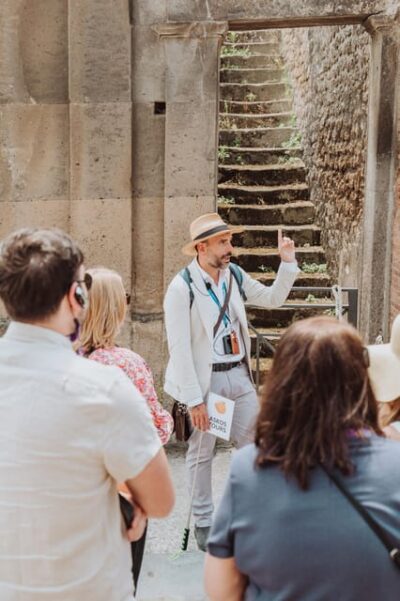
Pompeii: Entry Ticket and Guided Tour with an Archaeologist
Read our review →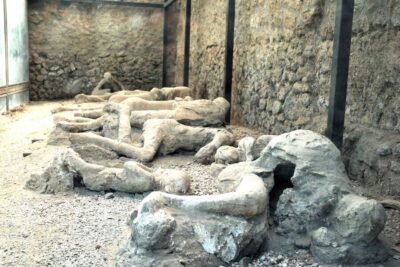
Pompeii: Entry Ticket with Optional Audio Guide
Read our review →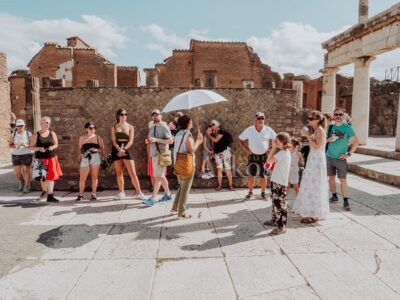
Pompeii: Small Group Tour with an Archaeologist
Read our review →
Pompeii: Skip-the-Line Entrance Ticket with Audio Guide
Read our review →
Naples: Pompeii and Mt. Vesuvius with Lunch and Wine Tasting
Read our review →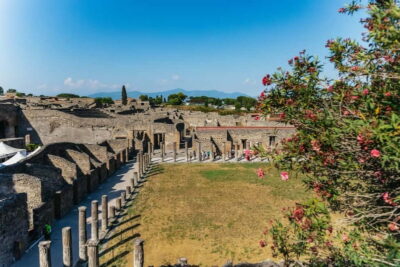
Pompeii: Archaeological Park Tour with Ticket on request
Read our review →
Discover the Ancient Ruins of Pompeii: Day Trip from Rome
Read our review →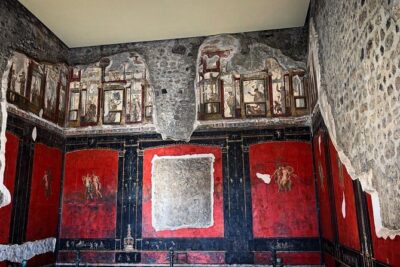
Browse the lists this tour appears in