
Reviewed · POMPEII TOURS
Pompeii and Herculaneum: Guided Tour with an Archaeologist
Pompeii gives you the street-level story of Roman life, while Herculaneum shows how differently the same eruption could preserve a town. The appeal here is not just seeing two famous ruins in one day, but having an archaeologist explain what you are looking at as you go.
I like the small-group format and the chance to compare Pompeii’s broad streets and public spaces with Herculaneum’s finely preserved homes. I also like that the guide, Benedetto, brings archaeological experience, humor, and practical help with the day’s logistics.
The main trade-off is pace: five hours covers two large sites, with only about two hours in Pompeii and 90 minutes in Herculaneum. You will get a focused introduction, not time to see everything, and transport and lunch cost extra.
Key points
- Two sites, two different stories: Pompeii shows the shape of a Roman town; Herculaneum is prized for vivid details and unusually preserved wood.
- Archaeologist guide: Benedetto leads the tour, with visitors praising his clear explanations, humor, and ability to answer questions.
- Entry tickets included: You skip the ticket line, though Pompeii tickets are named, so you must supply each participant’s first and last name.
- Small-group feel: Groups are advertised at up to 10 people, with private tours also available.
- A real lunch break: You have an hour between sites, but food and drink are not included.
- Plan for walking: Comfortable shoes, water, a hat, and your original passport or ID are important; the tour is not suitable for wheelchair users or people with mobility impairments.
Why seeing both sites changes the picture
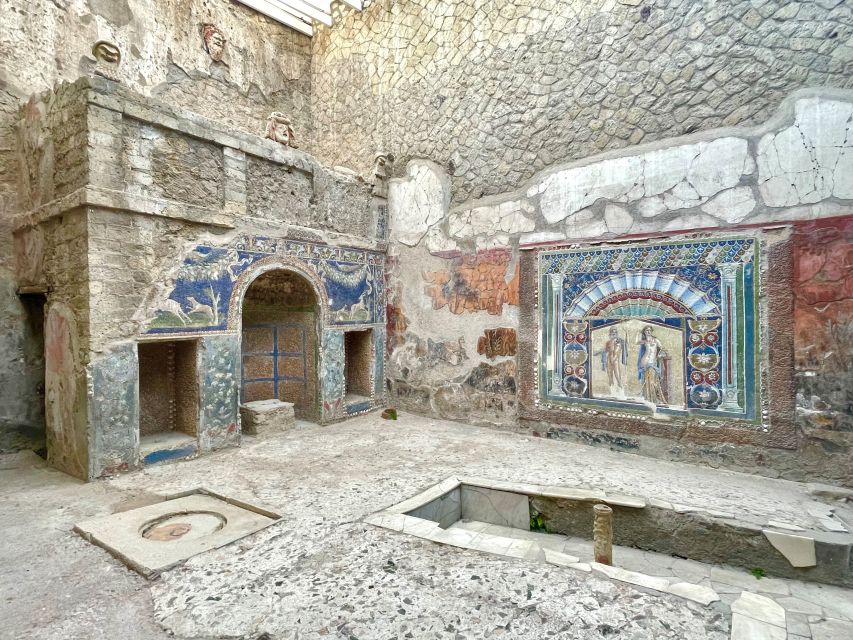
Pompeii and Herculaneum are often treated as interchangeable stops on a Vesuvius itinerary. They are not. Both were struck by the eruption in AD 79, but their different states of burial and preservation make the comparison worthwhile. Pompeii offers the scale of a Roman city, while Herculaneum rewards attention to domestic detail, including decoration and preserved wooden objects.
That contrast is the central value of this tour. A guide can help you connect the street plan, homes, shops, baths, and public buildings to everyday life rather than seeing them as a succession of old walls. Then, when you reach Herculaneum, you have a useful frame of reference for noticing what is different.
The guide is Benedetto, an archaeologist who has been praised for making the subject accessible to adults and children alike. His style is described as engaging and funny, with room for questions rather than a rigid script. That matters at sites this large: a good explanation helps you decide what deserves your attention, especially when the clock is running.
More guided departures in Pompeii:
- Pompeii: Entry Ticket and Guided Tour with an Archaeologist
★ 4.8 · 19,459 reviews - Pompeii: Entry Ticket with Optional Audio Guide
★ 4.2 · 12,360 reviews - Pompeii: Skip-the-Line Entrance Ticket with Audio Guide
★ 4.0 · 2,509 reviews
Starting at Porta Marina Inferiore
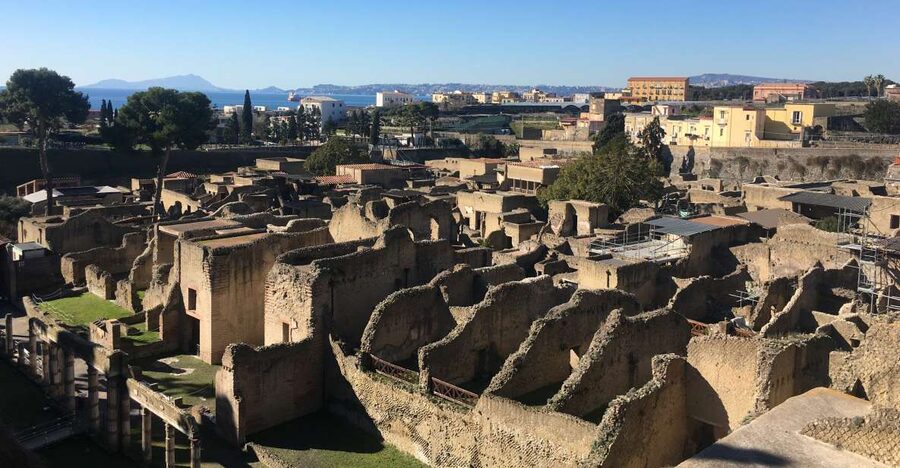
The meeting point is Ristorante Suisse, where the guide waits with a sign bearing your name. The tour then begins at Pompeii’s Porta Marina Inferiore and heads toward the theatre area. This is a practical start: you enter the ancient city and begin with its public and performance spaces before moving into the places where people lived and worked.
Pompeii is enormous, and a short visit calls for choices. The guided route focuses on the best-known buildings and features rather than trying to cover every street. I see that as a sensible trade. You leave with a clearer picture of the city, even if independent exploration would be needed for a fuller visit.
The small-group setup can help here. Benedetto has been praised for changing the route to avoid crowds and for leading people through less-obvious lanes. No route can promise empty streets, particularly at a site as popular as Pompeii, but a guide who knows the layout can make it easier to hear, see, and keep moving together.
Pompeii’s houses, shops, and Roman routines
After the theatre area, the route explores ancient houses with mosaics, frescoes, marble, and other decoration. These rooms give you a more intimate view than the grand public spaces. Look for how ornament and layout tell you about the people who lived there, and ask questions when a detail catches your eye. The tour’s archaeological focus is especially useful for turning decoration into evidence about Roman taste and daily life.
The walk also passes shops, bakeries, and snack bars. These are among the most approachable stops for families: they make ancient routines feel tangible, rather than remote or abstract. You can picture people buying food or going about a workday in the same streets where you are standing.
Public baths and the famous Lupanare add another layer. Together, the stops show that Pompeii was not just a collection of private homes or a monument frozen in time. It was a working community with public facilities, commerce, entertainment, and social life. The guide’s job is to bring those parts together, and this is where an archaeologist’s knowledge can add more than dates and names.
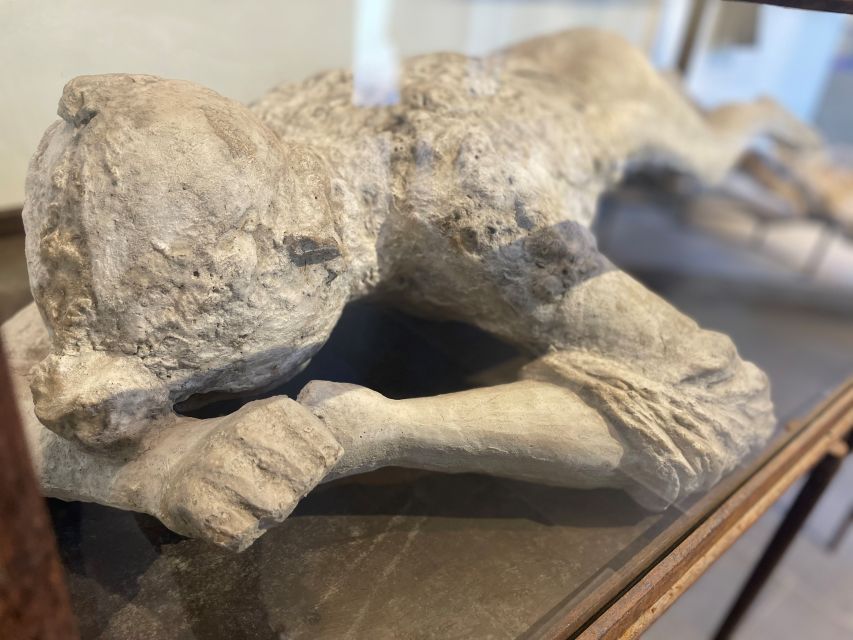
The visit ends at the Forum, Pompeii’s civic heart, with public buildings and plaster casts of victims. The casts can be difficult to see, but they are a powerful reminder that the ruins are not merely an archaeological site. They preserve the traces of a disaster that ended ordinary lives. Expect the stop to be emotionally striking as well as informative.
Two hours in Pompeii is enough for a guided overview, but not a complete visit. If you are deeply interested in one particular house or want to wander at your own pace, this schedule may feel brisk. If you want a strong introduction and a second site in the same day, the time allocation makes sense.
Lunch and the transfer to Herculaneum
A one-hour lunch break separates the visits. Food and drink are not included, so budget for your own meal. Ristorante Suisse is directly associated with the meeting point, and some tour participants have found it useful for breakfast or lunch, but you are not required to eat there.
The transfer to Herculaneum is listed as about 20 minutes by train, with a 30-minute train segment in the itinerary. Transportation is not included, so treat the connection as a separate cost and check the day’s arrangements before setting out. Some groups have used a shared taxi instead, including when rail conditions made that a better option. Benedetto has been praised for helping with transport questions and taxi arrangements, but you should not assume a ride is included in the price.
There is a small logistical wrinkle: the activity information names Herculaneum as the finish, while the meeting-point details also say the activity ends back at the starting point. Confirm the exact end arrangement before booking, particularly if you have onward travel to plan.
More Sorrento tours in Pompeii:
- Pompeii: Small Group Tour with an Archaeologist
★ 4.8 · 12,264 reviews - Pompeii Small Group Tour with an Archaeologist
★ 5.0 · 6,593 reviews - Naples: Pompeii and Mt. Vesuvius with Lunch and Wine Tasting
★ 4.5 · 2,454 reviews - Pompeii: Archaeological Park Tour with Ticket on request
★ 4.5 · 2,283 reviews
Herculaneum’s preserved homes and wooden details
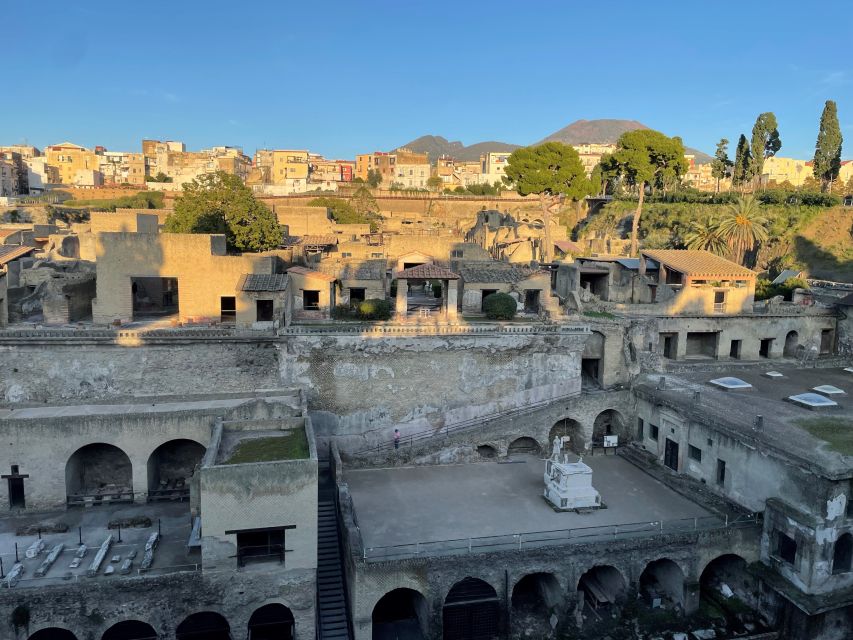
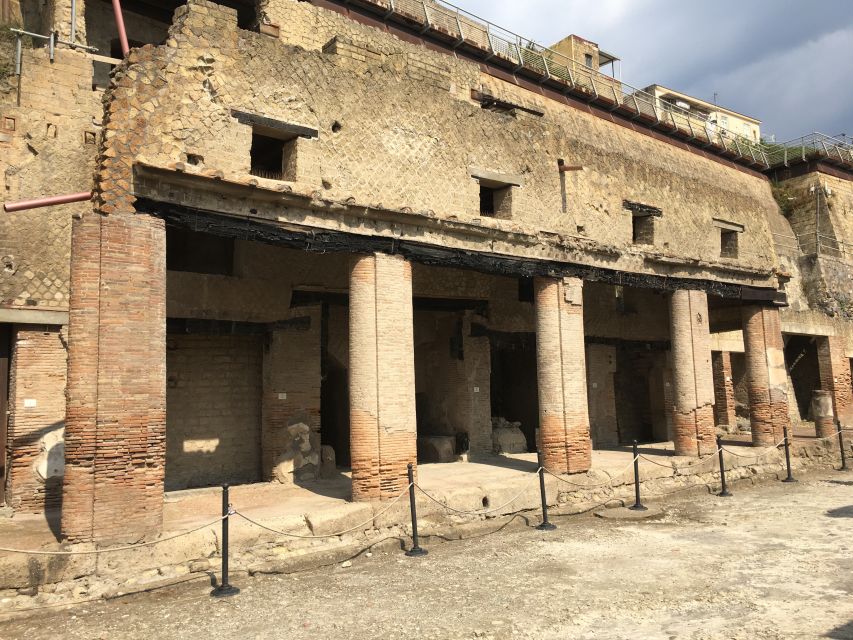
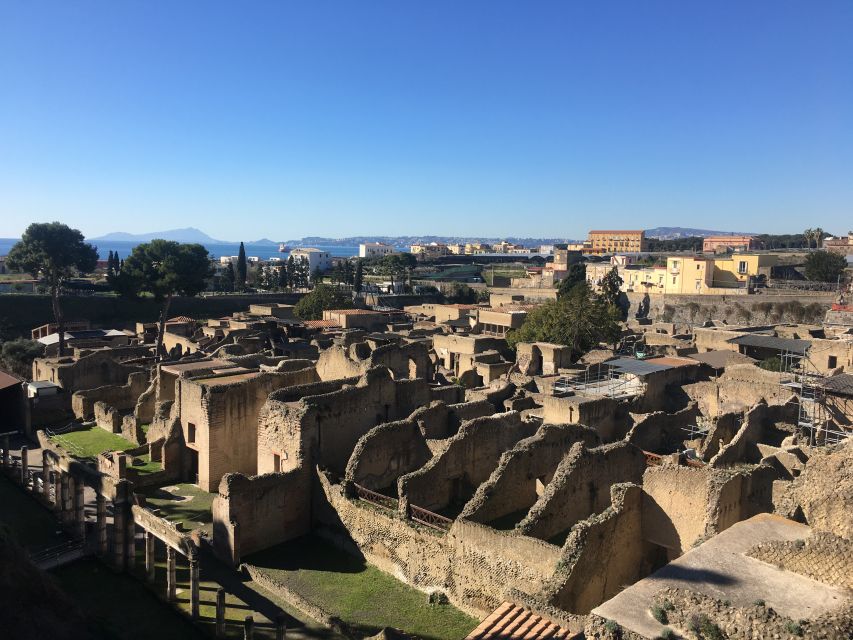
The Herculaneum visit lasts about 90 minutes. It is shorter than the Pompeii portion, but it offers a striking contrast. The site is described as a small jewel because its different burial and conservation conditions left a remarkable range of details to see.
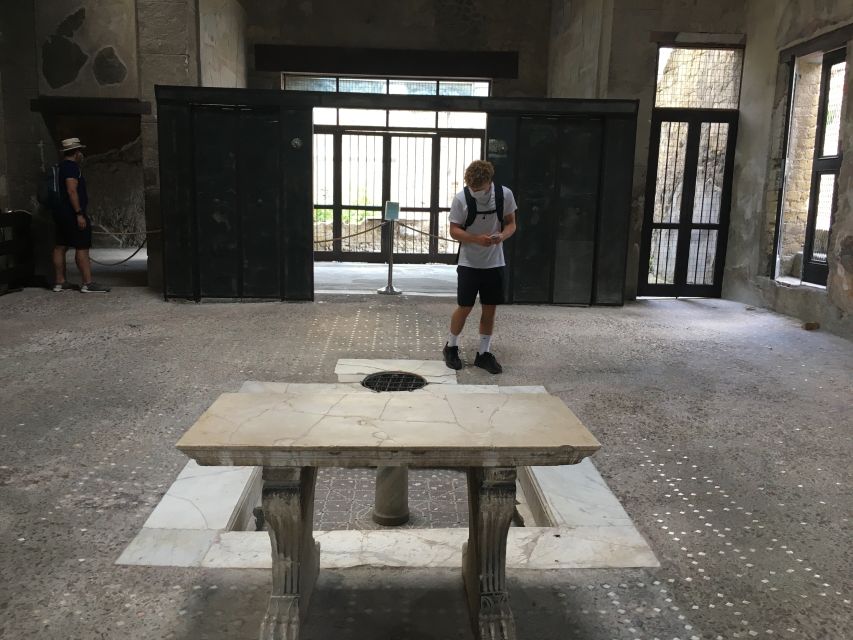
The tour highlights residences with frescoes, marble, mosaics, jewelry, skeletons, and exceptionally well-preserved wood. These fragile or unusual remains help make Herculaneum feel distinct from Pompeii. The experience is not simply more of the same; it shifts your attention toward the interiors and materials that survived.
The comparison also makes the day’s first half more meaningful. Once you have seen Pompeii’s public spaces and everyday businesses, Herculaneum offers another way to consider Roman domestic life and the consequences of the eruption. Several people who have already visited Pompeii have found that Herculaneum adds something genuinely new, rather than serving as an optional extra.
Herculaneum can be quieter than Pompeii, though crowd levels vary. A smaller site and a shorter guided visit can make it easier to focus, but 90 minutes is still a compact introduction. If you want a long, unhurried exploration of either site, you may prefer to visit separately or arrange more time.
What the guide adds to the ticket price
At $141.61 per person, this is not simply an entry ticket with a short commentary. The fee includes entry tickets and an archaeologist guide, with headsets provided for groups larger than eight. That combination is most valuable if you want context, a planned route, and help choosing what to notice in a limited visit.
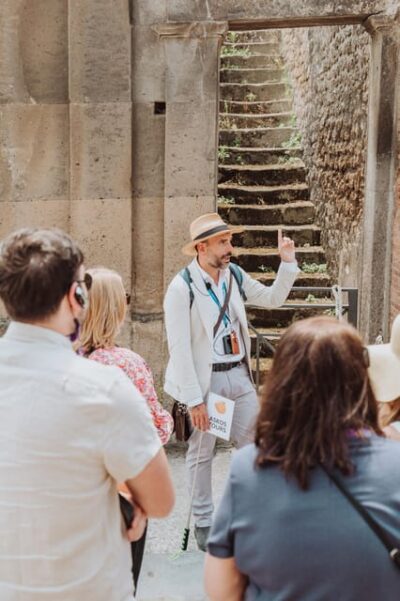
Benedetto’s archaeological background is a major part of the tour’s appeal. He has been described as well-organized, patient, funny, and able to explain both sites in a way that works for children. People also value his help with questions before the visit and with practical matters such as transport, lunch, and getting around crowds. Those qualities make a difference on a day that involves two sites and a transfer.
The value depends on how you like to travel. If you are content to read signs and explore independently, you may not need a guided tour. But if you want to understand how the buildings fit into Roman society, or you are visiting Pompeii for the first time, an archaeologist’s explanations can make the ticket price easier to justify. The small-group or private format also gives you more opportunity to ask questions than a large, tightly managed group would.
Remember that the listed price does not cover transport between sites, food, or drink. Factor those costs into your day. The tour includes free time for lunch, not a meal.
Who will get the most from this five-hour tour
This tour suits first-time visitors who want a structured introduction to both sites and would rather learn from an expert than navigate every turn alone. It is also a good fit for families: the guide’s humor and clear explanations can help younger visitors stay engaged, and the route includes concrete details such as bakeries, snack bars, frescoes, and the casts.
Photography and archaeology enthusiasts have reason to consider it, too. The two locations offer different subjects, from Pompeii’s broad civic spaces to Herculaneum’s preserved home interiors. A guide can help you notice details that might otherwise blend into the background.
The pace and physical demands deserve attention. The tour involves walking through archaeological sites and is explicitly not suitable for people with mobility impairments or wheelchair users. Wear comfortable shoes, bring water and a hat, and carry your original passport or ID card. Pompeii tickets are named, so after booking you need to provide the first and last names of all participants, and you must bring the original identity document.
You can choose a private tour or a small group, with groups advertised at up to 10 people. Private touring costs more when the price is calculated per person, but it may be a better fit if you want a more tailored pace or have a group with particular interests. The standard small-group option offers a balance between personal attention and cost.
Should you book it?
Book this tour if you want Pompeii and Herculaneum explained as connected, contrasting places, and if you value an archaeologist’s perspective more than a longer stretch of unstructured wandering. Benedetto’s mix of archaeological insight, humor, and practical help is a strong reason to choose it, especially for a family or a first visit.
Skip it if you want to spend several hours at just one site, need step-free access, or prefer to keep transport and lunch fully organized in advance. For most people who want a focused day at both ruins, the guided route is a useful way to make the most of limited time. Confirm the end point and transfer plan before you go, then bring your ID, water, and shoes made for a lot of walking.
FAQ
How long is the tour?
The tour lasts five hours. It includes about two hours at Pompeii, a one-hour lunch break, a train transfer, and about 90 minutes at Herculaneum.
Which languages are available?
The live guide is available in English, Italian, and French.
Are entry tickets included?
Yes. Entry tickets are included, and the tour skips the ticket line. Pompeii tickets are named, so you must provide the first and last name of every participant after booking.
Is transport between Pompeii and Herculaneum included?
No. Transportation is not included. The transfer is described as about 20 minutes by train, and some groups have arranged a taxi instead.
What should I bring?
Bring your original passport or ID card, comfortable shoes, a hat, and water. You will also need to provide each participant’s full name for the Pompeii ticket.
Is the tour suitable for wheelchair users?
No. The activity is listed as unsuitable for wheelchair users and people with mobility impairments.
New this season around Pompeii
- Scooter rental on the Amalfi Coast★ 5.0 · 90 reviews
- Pompeii: Skip-the-Line Guided Tour★ 4.6 · 139 reviews
- Ancient Pompei in the afternoon★ 5.0 · 140 reviews
- Pompeii: Archeological Tour & Wine Tasting at Mt. Vesuvius★ 4.6 · 142 reviews
- Pompeii: 2-Hour Guided Tour with an Archaeologist★ 4.9 · 151 reviews
- Pompei: Pompeii Private Tour★ 4.8 · 146 reviews
- Horseback Riding on Vesuvius★ 5.0 · 144 reviews
- Pompeii Skip-the-Line Entry Small Group Guided Tour★ 5.0 · 151 reviews
Pompeii Tours, compared.
Pompeii: Entry Ticket and Guided Tour with an Archaeologist
Read our review →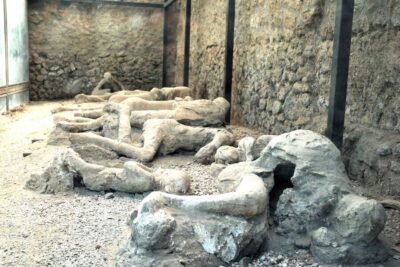
Pompeii: Entry Ticket with Optional Audio Guide
Read our review →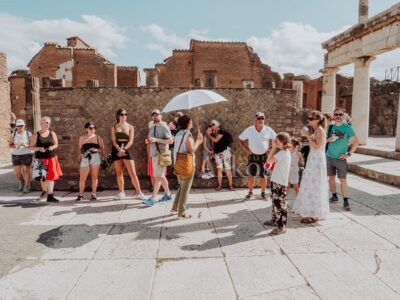
Pompeii: Small Group Tour with an Archaeologist
Read our review →
Pompeii: Skip-the-Line Entrance Ticket with Audio Guide
Read our review →
Naples: Pompeii and Mt. Vesuvius with Lunch and Wine Tasting
Read our review →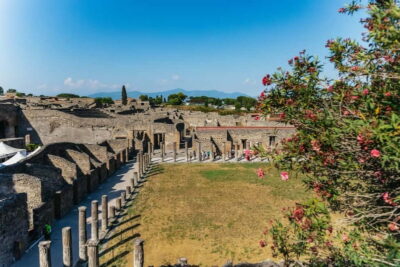
Pompeii: Archaeological Park Tour with Ticket on request
Read our review →
Discover the Ancient Ruins of Pompeii: Day Trip from Rome
Read our review →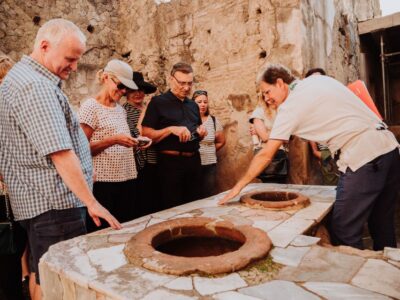
Browse the lists this tour appears in