
Reviewed · POMPEII TOURS
Pompeii Private Tour with an Archaeologist and Skip The Line
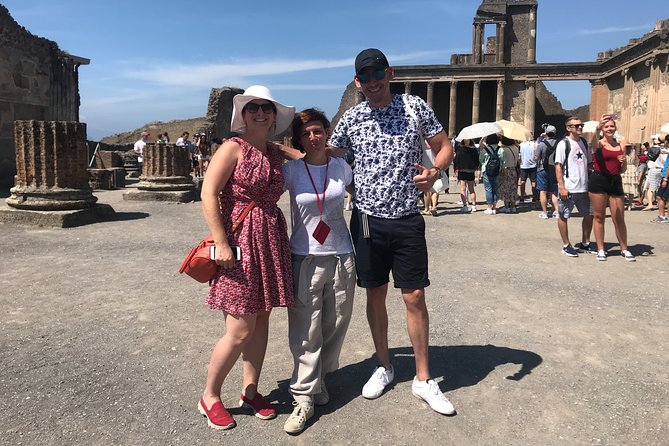
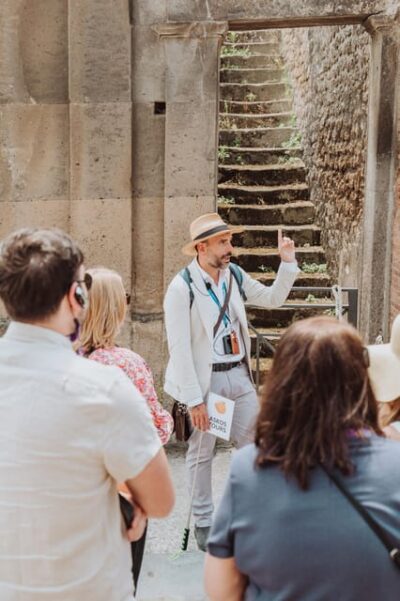
Pompeii makes far more sense when someone helps you read it. In two hours, this private tour connects the theaters, baths, shops, Forum, and homes, so you see more than a jumble of old walls and can picture how the city worked before the eruption of 79 AD.
I like two things in particular: the route brings everyday life into focus, from fast-food counters to the public baths, and a private guide can adjust the pace and subjects to your group. Guides such as Luisa, Eliana, and Viktoria have been praised for clear storytelling, crowd-aware routing, and keeping children engaged.
There is one important catch: site admission is not included. The tour price is $375.05 for up to 10 people, then you must add a €19 ticket for each adult. Skip-the-line access does not mean you can arrive without a ticket and walk straight in, so arrange admission ahead, especially in high season.
At a glance: the details that shape the visit
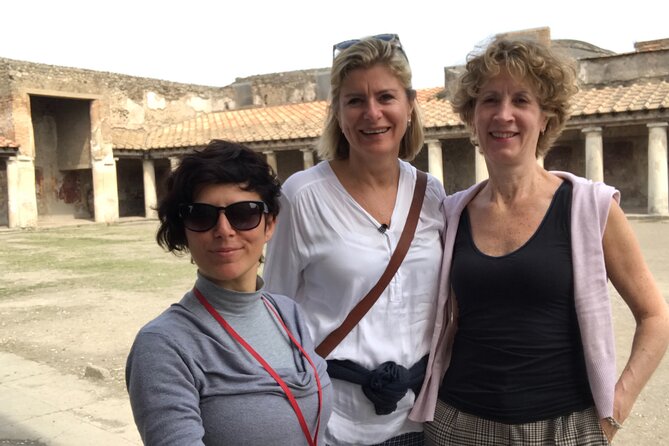
- Private for up to 10: Your guide works with your group alone, making it easier to ask questions and tailor the visit.
- A two-hour highlights route: Expect major public spaces, homes, baths, theaters, and the brothel, not a full survey of Pompeii.
- Admission costs extra: Tickets are €19 per person, with free entry for visitors under 18 who bring ID or a passport.
- Skip the ticket-office queue only with a ticket in hand: The operator sends a link for advance purchase, or you can buy admission on site.
- A guide can make the ruins legible: The strongest part of this experience is the personal explanation, not simply getting from one stop to the next.
- Meet at Piazza Esedra: The tour starts and ends at Piazza Esedra, 10, in Pompeii.
Two hours to picture a Roman city
Pompeii is vast, and its streets can be hard to interpret without context. A doorway may lead to a home, a shop, or a courtyard; a worn stone counter may mark a place where people bought a quick meal. A guide’s job is to connect these pieces, and that matters more here than at a compact site with a single monument.
This tour concentrates on a practical selection of major sights. You move between public buildings and private spaces, seeing how entertainment, worship, business, bathing, and justice fitted together. Two hours is enough for a strong introduction, but not enough to explore every open street or house at leisure.
That limit is worth keeping in mind. The route can show you a lot, but Pompeii rewards lingering. If you want to study wall paintings, examine every room, or wander far beyond the central areas, plan time to continue on your own after the guided portion.
The guide can also help you decide what deserves that extra time. Several guides, including Eliana Sandretti and Luisa, have been praised for drawing attention to details that are easy to miss and sharing directions for further independent exploration.
More private tours in Pompeii:
- Pompeii Ruins Private Tour with Optional Skip-the-Line Entry
★ 4.9 · 732 reviews - Pompeii private tour with an Official Guide
★ 5.0 · 631 reviews - Pompeii Private Tour with an Archaeologist and Skip The Line – 3 hours
★ 5.0 · 564 reviews
Theaters, acoustics, and a walk down the main street
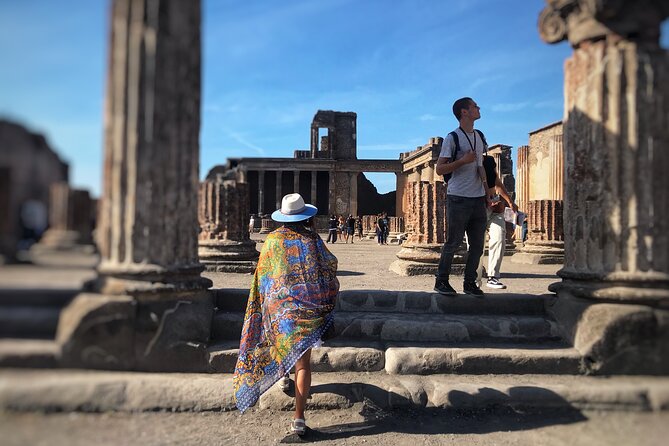
The visit begins among Pompeii’s theaters. At the Small Theater, also called the Odeion, the guide explains how its design helped create good acoustics. That is a useful first stop because it makes the buildings feel purposeful: Roman architecture was not just grand-looking, it was designed for people to hear and gather.
The route also includes the Great Theater, the site’s most important theater. The listed stop is about 15 minutes, enough for an introduction to the space and its role in public life, rather than a lengthy examination of every feature. If theaters are a particular interest, ask your guide what can be covered within the time.
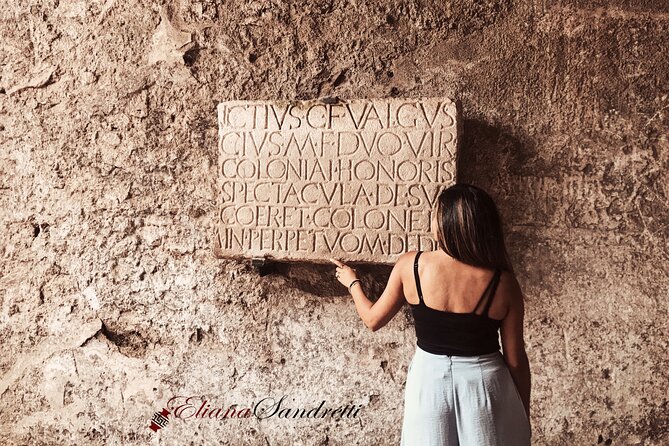
You cross Via dell’Abbondanza, Pompeii’s main street. This is one of the route’s most helpful transitions. Instead of treating each ruin as an isolated attraction, you follow a major artery through the city, with shops and other signs of daily activity along the way.
The tour also visits the Quadriporticus of the theaters, associated with the gladiator barracks. You see the apartments and the area where gladiators trained. It is a striking change of subject from theatergoing: here, the guide can explain the lives of performers who entertained the public in a very different way.
The Forum, temples, and the machinery of civic life
The Forum was Pompeii’s main square, a center for markets, temples, and public affairs. The stop is brief, around 10 minutes according to the route, but it gives you a useful map of the city’s civic heart. From here, it is easier to understand why nearby temples and official buildings were placed where they were.
The Temple of Jupiter stands in the Forum area. The Temple of Venus is another planned stop, dedicated to the city’s divinity. These religious sites help explain the spiritual life of Pompeii, but their value is also spatial: they show how worship and civic identity were woven into the central square.
The Basilica is described as Pompeii’s ancient court, where justice was administered. It offers a different angle on public life from the temples and market spaces. The remains may look sparse at first, but a guide can help you picture the building’s role and the people who gathered there.
A private tour is especially useful in this part of the site. You can stop to ask how a building functioned or how its use changed, instead of keeping pace with a large group. Guides have adapted topics to family interests and answered questions in detail, which makes the short stops feel less like a checklist.
Baths, shops, and the everyday city
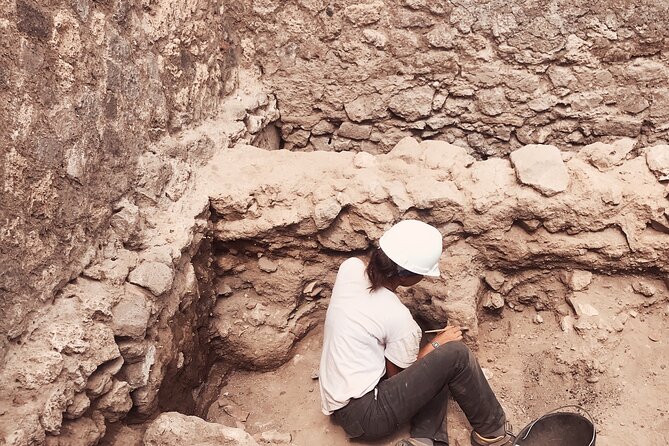
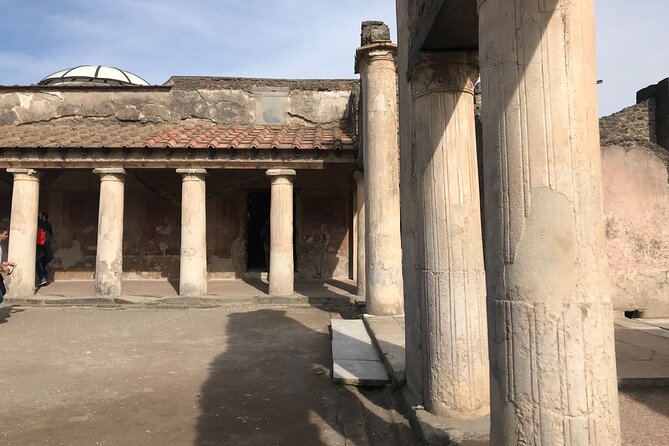
The Stabian Baths are among the route’s main attractions and are described as Pompeii’s best-preserved bathing complex. The visit lasts about 15 minutes. You can learn how a Roman bathhouse served as more than a place to wash: it was part of the city’s social routine and a major public facility.
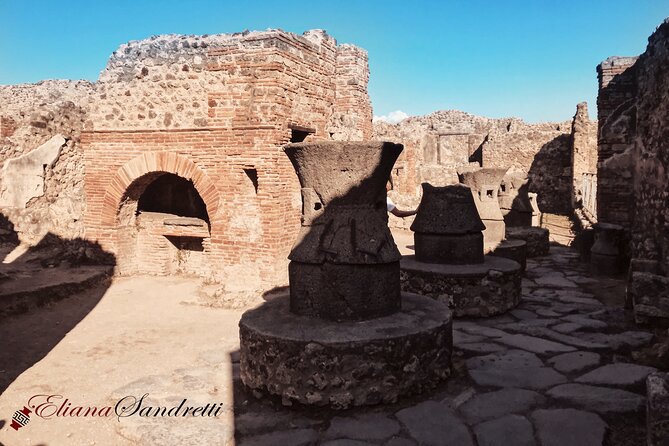
The route also takes in shops and a fast-food area. These ordinary details are often what make Pompeii click. A temple tells you what people honored; a food counter suggests what they ate when they were away from home. The remains give you a street-level view of life, not just a parade of important buildings.
A rich private house provides a contrast with those commercial spaces. The featured residence is the Casa del Fauno, one of Pompeii’s most luxurious homes. Its scale and layout help show how wealth shaped domestic life, while the name itself points to the faun statue associated with the house.
The route lists about 15 minutes at the Casa del Fauno. That is enough for a guided introduction, though visitors fascinated by domestic architecture may want more time afterward. If you have a particular interest in houses, mosaics, or interior decoration, mention it early so the guide can make the best use of the allotted time.
More Sorrento tours in Pompeii:
- Pompeii: Entry Ticket and Guided Tour with an Archaeologist
★ 4.8 · 19,459 reviews - Pompeii: Entry Ticket with Optional Audio Guide
★ 4.2 · 12,360 reviews - Pompeii: Small Group Tour with an Archaeologist
★ 4.8 · 12,264 reviews - Pompeii Small Group Tour with an Archaeologist
★ 5.0 · 6,593 reviews
The casts and the human cost of the eruption
At the Granaries of the Forum, you see casts of people who died in the eruption of 79 AD, along with a deposit of amphorae and work tools. The granaries make an arresting stop because they bring two parts of Pompeii together: the city’s working life and the people who could not escape the disaster.
The casts are powerful, but they can also be difficult to look at. They are a reminder that this is not simply an ancient town preserved for modern curiosity. People lived and worked here, and the eruption ended their lives. A guide can provide context while allowing you time to take in the scene at your own pace.
This stop also makes the guide’s role particularly valuable. A brief explanation can clarify what the casts represent and why they are kept in this area, without reducing the moment to a photo opportunity. If you are visiting with children, you can ask for an age-appropriate explanation.
The Lupanar and Pompeii’s less polished side
The Lupanar, Pompeii’s brothel, is part of the route. It adds a candid, everyday dimension to the visit, although it is a small stop rather than an extended discussion. The description gives it as a free-admission stop within the tour, while your paid archaeological-site ticket remains a separate matter.
The broader route includes temples and grand homes, but the Lupanar shows another side of urban life. Pompeii was a working city with pleasures and routines that do not fit neatly into a picture of classical marble and public virtue. You may find this stop especially interesting if you want a less formal view of Roman society.
What the private format is worth
At $375.05 per group of up to 10, the tour is not a low-cost add-on for one person. The value improves as your group size grows: a family or a group of friends can share the guide’s time, while a solo visitor or couple pays much more per person. Remember to add admission at €19 per adult. Visitors under 18 enter free, but should carry an ID or passport because their date of birth may be checked.
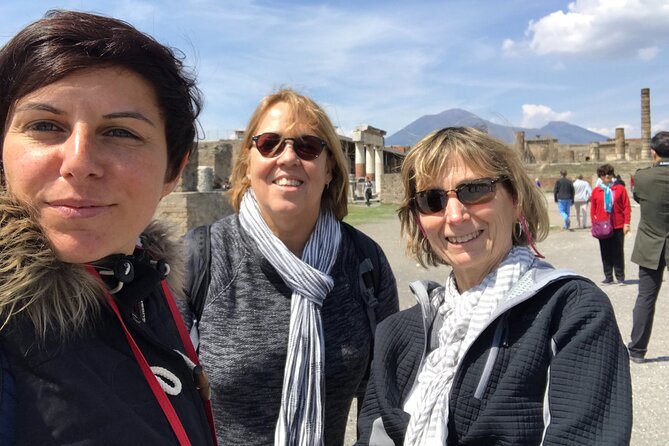
The stronger case for paying is the quality of the visit, not a promise to see every corner of Pompeii. Guides including Luisa, Eliana Sandretti, Raffaele, Viktoria, and Luciana have been singled out for enthusiasm, clear explanations, and adapting the route or subject matter to the group. One guide helped an extended family avoid crowds and take group photos; another found shady spots and adjusted the route for elderly family members.
That personal attention can make a two-hour visit more productive. You can ask questions, request a family-friendly explanation, or say what interests you most. Some guides also point out what to see after the tour, and one provided a marked map to help the group continue exploring independently.
Still, the experience depends on the individual guide. Most of the available feedback is very positive, but one account describes an unhelpful, patronizing style and another felt the route moved past too many sights. If you have specific priorities, say so at the start rather than hoping the guide will guess.
Getting the ticket and timing right
The meeting point is Piazza Esedra, 10, Pompeii, and the tour returns there at the end. The experience is offered in English; another language is available only on request. Confirmation arrives at booking, and the operator says it will send a link one day before the tour so you can buy admission online.
The advertised skip-the-line benefit needs careful reading. The tour does not include the archaeological park ticket. To benefit from skipping the ticket-office queue, buy your ticket online in advance; you can also buy it at the site, but that may mean waiting at the ticket office. The available information does not promise that every entrance queue will disappear, so treat pre-purchased admission as essential and follow the operator’s instructions.
High season is the time to be especially organized. The operator recommends buying in advance and offers help with the purchase link. If you prefer to arrange tickets earlier than the day before, contact the provider for the information and link.
The tour generally suits most visitors, and service animals are allowed. Bad weather may affect the outing; if the provider cancels because of a storm, you can choose another date or receive a full refund. You can cancel for a full refund up to 24 hours before the start time.
Should you book this Pompeii tour?
Book it if you want a focused introduction, value a private guide, or are visiting with children or a mixed-age family. The route covers the key public spaces and several vivid details of daily life, and a good guide can make the ancient city feel understandable in a short time.
Consider another approach if you want a very slow, exhaustive visit or are traveling alone on a tight budget. The two-hour tour is a highlights walk, not a substitute for spending a full day at the site, and admission is extra. For most groups with limited time, though, the private format is a sensible way to make Pompeii’s scale less daunting. Book with your ticket plan settled, share your interests at the beginning, and leave time afterward for the places you want to explore more deeply.
FAQ
Is the Pompeii entrance ticket included?
No. Admission costs €19 per person, and visitors under 18 receive free tickets.
How long does the tour last?
The tour lasts about two hours.
Is this a private tour?
Yes. Only your group participates, with a maximum group size of 10.
Where does the tour start and end?
It starts at Piazza Esedra, 10, in Pompeii, and ends back at the meeting point.
What language is the tour conducted in?
The tour is offered in English. Another language is available only on request.
How do I get the skip-the-line benefit?
You need to have an admission ticket. The operator sends a link one day before the tour so you can buy tickets online in advance. You can also buy them at the site.
How much does the tour cost?
The listed price is $375.05 per group of up to 10 people. Admission tickets cost extra.
Do children need to pay for admission?
Visitors under 18 receive free tickets. They should bring an ID or passport because their date of birth may be checked.
What sights are included in the route?
The route includes the theaters, Via dell’Abbondanza, the Forum granaries and casts, Stabian Baths, Forum, Basilica, temples, gladiator barracks, Lupanar, and Casa del Fauno.
What happens if bad weather cancels the tour?
If the tour is canceled because of poor weather, you can choose another date or receive a full refund.
New this season around Pompeii
- Scooter rental on the Amalfi Coast★ 5.0 · 90 reviews
- Pompeii: Archeological Tour & Wine Tasting at Mt. Vesuvius★ 4.6 · 142 reviews
- Pompeii: Skip-the-Line Guided Tour★ 4.6 · 139 reviews
- Ancient Pompei in the afternoon★ 5.0 · 140 reviews
- Pompeii: 2-Hour Guided Tour with an Archaeologist★ 4.9 · 151 reviews
- Pompei: Pompeii Private Tour★ 4.8 · 146 reviews
- Horseback Riding on Vesuvius★ 5.0 · 144 reviews
- Pompeii Skip-the-Line Entry Small Group Guided Tour★ 5.0 · 151 reviews
Pompeii Tours, compared.
Pompeii: Entry Ticket and Guided Tour with an Archaeologist
Read our review →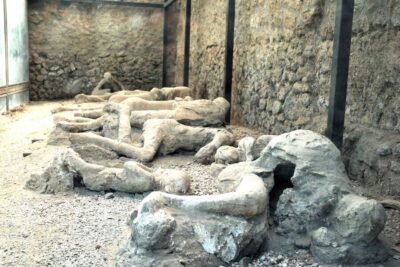
Pompeii: Entry Ticket with Optional Audio Guide
Read our review →
Pompeii: Small Group Tour with an Archaeologist
Read our review →
Pompeii: Skip-the-Line Entrance Ticket with Audio Guide
Read our review →
Naples: Pompeii and Mt. Vesuvius with Lunch and Wine Tasting
Read our review →
Pompeii: Archaeological Park Tour with Ticket on request
Read our review →
Discover the Ancient Ruins of Pompeii: Day Trip from Rome
Read our review →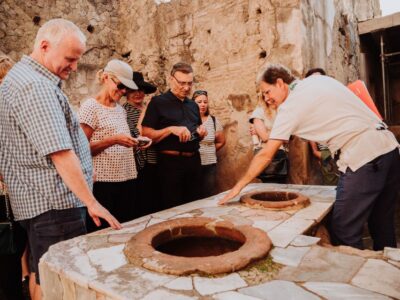
Browse the lists this tour appears in